
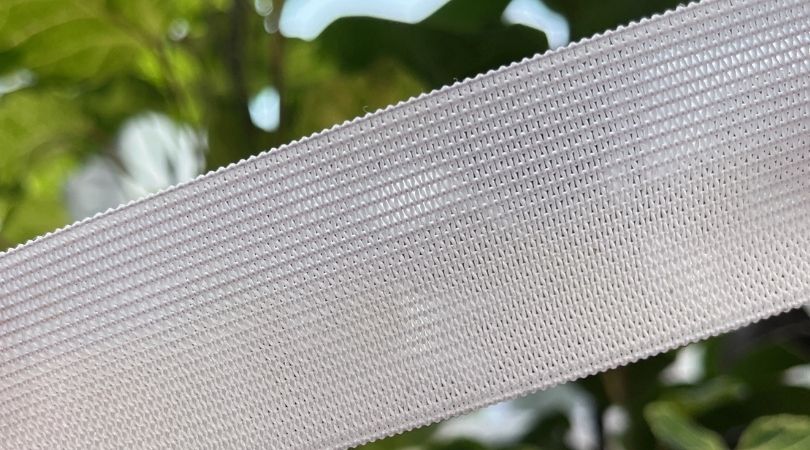
This article explains the recovery rate of functional knitted elastic tape in practical terms. Through ISO and ASTM test standards, it helps verify whether activewear can maintain stable fit after high-intensity movement and repeated washing, thereby reducing customer complaints and strengthening supply chain quality consistency.
In the activewear and compression garment markets, the quality of accessories often determines the final performance of the finished product. For purchasing managers and buyers, selecting knitted elastic tape is not only a matter of cost, but also directly affects product lifespan, wearing comfort, and brand reputation. If the elastic tape loses its recovery after repeated stretching and washing, it may cause waistbands to slip, cuffs to loosen, or pressure to become uneven, which in turn increases the risk of complaints and returns.
Keywords: knitted elastic tape, high recovery, ISO 20932-3, ASTM D2594, activewear, recovery rate, supply chain quality control
The key to performance apparel: the mechanical behavior of high-recovery knitted elastic tape
The core of functional apparel lies in dynamic body-hugging comfort, and that comfort depends largely on the coordinated performance of elastic fibers and knitted structure within the elastic tape. When evaluating suppliers, purchasing teams should not focus only on the initial stretch feel, but also confirm whether the material can maintain stable recovery after repeated stress.
Many products perform well when first produced, but after high-intensity use and multiple wash cycles, they may experience elastic fatigue and permanent deformation. For brands, such issues are directly reflected in consumer wearing experience and long-term product evaluation.
ISO 20932-3: a key standard for narrow fabric elasticity testing
For narrow elastic materials such as knitted elastic tape, ISO 20932-3 is one of the most relevant test standards. This standard focuses on the determination of elasticity in narrow fabrics, making it more suitable for applications such as elastic tape, binding tape, and waistband components.
Typical test points include recovery after stretching, dimensional stability, and changes after repeated use. For purchasing managers, these data help determine whether a supplier’s elastic tape is appropriate for high-activity sportswear applications.
ASTM D2594: evaluating stretch and recovery in knitted fabrics
In the North American market and many global sourcing specifications, ASTM D2594 is commonly used to test the stretch and recovery performance of low-power knitted fabrics. This standard helps purchasing teams understand how a material behaves under load and how well it recovers after the force is removed.
If the product is used in waistbands, cuffs, or close-fitting areas, the results from ASTM D2594 can serve as important references for supplier evaluation and batch acceptance. For procurement, this kind of quantified information is far more useful than a simple hand-feel judgment.
International standards and regulations comparison table
The following table summarizes the international standards most relevant to knitted elastic tape and activewear accessories, helping purchasing managers quickly compare suppliers’ test reports.
| Test Standard | Test Subject | Test Focus | Purchasing Application |
|---|---|---|---|
| ISO 20932-3 | Narrow fabrics, knitted elastic tape, binding tape | Elastic recovery, stability after extension | Waistbands, cuffs, and hem design for sportswear. |
| ISO 20932-1 | General fabric elasticity testing | Basic stretch and recovery evaluation | Fabric development and baseline performance comparison. |
| ASTM D2594 | Low-power knitted fabrics | Stretch, growth, and recovery performance | Verification of functional knitted fabrics and elastic accessories standards. |
| ISO 6330 | Dimensional stability after washing | Shrinkage and appearance changes after washing | Quality confirmation for products that should not twist or deform after laundering. |
From a procurement perspective, ISO 20932-3 is closer to the actual usage of knitted elastic tape, while ASTM D2594 is better suited for evaluating the overall recovery behavior of knitted materials under low tension. If the product is intended for frequent sports use, suppliers should ideally include both standards in their test reports.
Knitted Elastic: Differences between high-recovery and standard commercial types
When facing price differences, purchasing managers should focus on product life cycle and quality stability rather than only unit cost. The table below can be used as an initial supplier screening reference.
| Evaluation Aspect | High-Recovery Functional Type | Standard Commercial Type | Purchasing Insight |
|---|---|---|---|
| Material composition | High proportion of elastic fibers with stable knitting structure | Basic elastic formulation | Affects initial recovery force and fatigue resistance |
| Cyclic recovery performance | Remains stable after repeated stretching | Tends to loosen over time | Determines long-term fit and wearability |
| Washing fatigue resistance | Better performance retention after washing | Elasticity decreases more easily after washing | Related to after-sales complaints and return risk |
| Quality consistency | Smaller batch-to-batch variation | Greater batch fluctuation | Affects bulk lead time and acceptance stability |
| Sustainability management | Can align with eco-material and supply chain requirements | Mostly basic specifications | Supports brand ESG and procurement review |
For procurement teams, the value of a high-recovery product is not only in material performance, but also in supply stability and brand risk control. If test conditions and acceptance criteria are established early in development, mass production will be much easier to manage.
Why supply chain quality management matters
For purchasing teams with years of practical experience, quality is not just the result of finished-product inspection, but a full-process issue that spans raw materials, knitting, finishing, and shipment. If a supplier has implemented an ISO 9001 quality management system, it indicates that its production flow, traceability, and corrective-action mechanisms are relatively complete, making risk more controllable for the purchasing team.
In addition, as brands place greater emphasis on sustainability and environmental responsibility, suppliers with an ISO 14001 environmental management system are also more likely to pass international brand audits. Considering both quality and environmental management in procurement will help reduce overall supply chain risk.
Conclusion: making procurement decisions with data
In the highly competitive activewear market, knitted elastic tape is not merely an accessory; it is a critical component that affects product comfort and brand trust. Through standardized testing such as ISO 20932-3 and ASTM D2594, purchasing managers can evaluate supplier capabilities more accurately and shift from price-driven decisions to a strategy that balances performance and risk.
Selecting knitted elastic tape with high recovery, stable batch performance, and clear test reports helps improve product consistency, reduce complaint rates, and build a stronger long-term supply chain partnership.
Illume Ltd. provides professional product testing and supply chain management services to help your products meet global quality inspection standards (paid service)
References:
- ISO 20932-3: Textiles — Determination of the elasticity of fabrics — Part 3: Narrow fabrics.
- ASTM D2594: Standard Test Method for Stretch Properties of Knitted Fabrics Having Low Power.standards.
⚠️ Note: The test methods and data mentioned in this article are common industry practice references. Actual specifications must still be confirmed according to product design, intended use, and brand technical standards.