
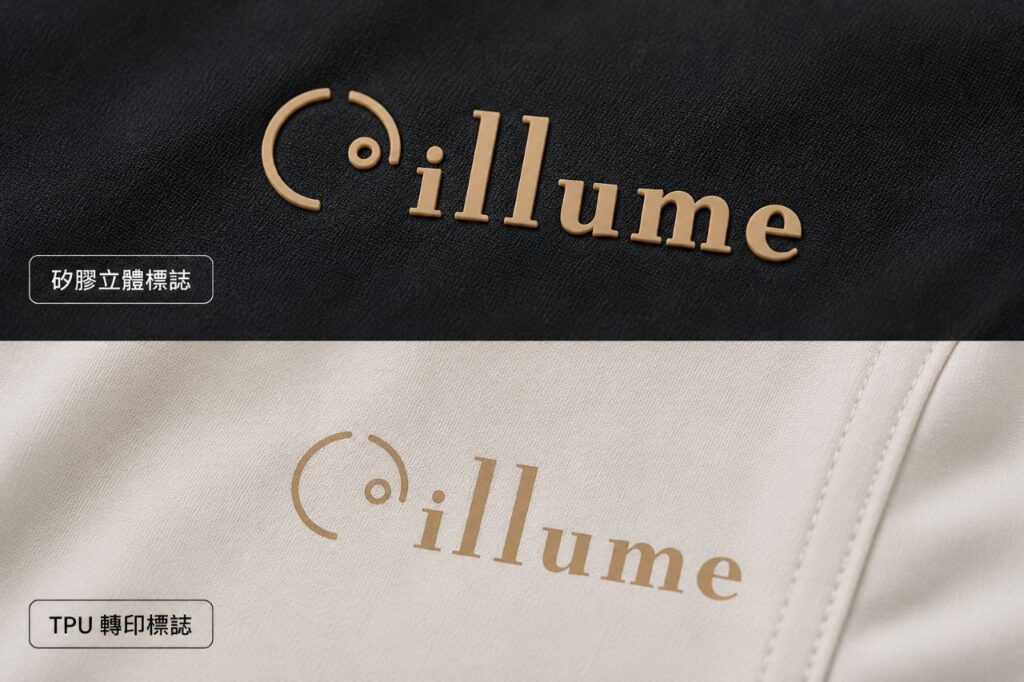
This article explores the applications of Silicone and TPU Transfer Logo in outdoor sportswear, functional apparel, and outdoor equipment. It introduces the characteristics of silicone and TPU logos and explains weather resistance testing methods such as ISO 4892, ISO 188, and AATCC TM16, helping procurement professionals select the most suitable product identification solution.
In outdoor sportswear, hiking equipment, functional jackets, and athletic footwear, product logos and labels are more than brand symbols. They also play an important role in product identification, product line recognition, and enhancing the overall appearance.
Because outdoor products are exposed to sunlight, high temperatures, low temperatures, rain, and humid environments for long periods, logo materials with poor weather resistance may crack, discolor, harden, lift, or peel off. These failures not only affect product quality but may also reduce consumer confidence in the brand.
Therefore, procurement professionals should consider not only appearance and design but also the weather resistance of TPU and silicone logos under different environmental conditions, as well as whether they meet relevant international testing standards. This helps improve product reliability and brand value.
Keywords: Silicone and TPU Transfer Logo, weather resistance, sportswear
Applications of Silicone and TPU Transfer Logo in Sportswear
In recent years, the outdoor sports market has grown rapidly, and brands have placed greater emphasis on product identification design. Different logo materials are now selected according to product requirements.
Common applications include:
- Outdoor waterproof jacket brand logos
- Hiking backpack branding
- Sports pants decorative logos
- Heat-sealed decorative patches
- Shoe upper brand logos
- Waterproof bag identification logos
- Ski apparel branding
- Functional apparel sleeve badges
The four most common types on the market are:
Silicone 3D Logo
Features:
- Soft texture
- Excellent resilience
- Comfortable touch
- Can create embossed 3D effects
Widely used for:
- Sportswear
- Baseball caps
- Sports pants
- Fitness products
Silicone Heat Transfer Logo
Features:
- Low profile
- Suitable for mass production
- Fine details
- Ideal for brand logos
Commonly used for:
- Compression garments
- Compression shirts
- Cycling apparel
- Running apparel
TPU High-Frequency Welded Logo
Features:
- Thin profile
- Bonds well with fabric
- Excellent waterproof performance
- Fine appearance
- Suitable for mass production
Applications:
- Waterproof jackets
- Functional apparel
- Seam-sealed garments
TPU Injection-Molded 3D Logo
Features:
- Excellent three-dimensional appearance
- Premium look and feel
- Supports multiple colors
- Good abrasion resistance
Applications:
- Backpacks
- Outdoor equipment
- Footwear
Why Is Weather Resistance Important for TPU Logos?
Outdoor products may be exposed to:
- High temperatures inside vehicles during summer (60–80°C)
- Low winter temperatures (below -20°C)
- UV exposure
- Rain
- Humidity
- Salt in coastal environments
- Long-term bending and flexing
Poor material selection may result in:
- Surface cracking
- Yellowing
- Loss of elasticity
- Logo lifting
- Adhesive failure
- Color fading
For this reason, brands often require suppliers to provide weather resistance test reports.
Table 1. Common International Testing Standards for Outdoor Product Identification Logos (Recommended Values for Reference Only)
| Test Item | International Standard | Test Purpose | Typical Recommended Value (Reference Only) |
|---|---|---|---|
| Xenon Light Resistance | ISO 4892-2 | Simulated sunlight aging | 48–200 hours |
| UV Aging | ASTM G154 | UV weathering | 200–500 hours |
| Heat Aging | ISO 188 | High-temperature stability | 70–100°C |
| Cold Resistance | ASTM D2137 | Low-temperature flexibility | -20 to -40°C |
| Color Fastness | AATCC TM16 | Fade resistance | Grade 4 or above |
| Adhesion Strength | ASTM D903 | Bonding performance | According to brand requirements |
Note: The testing conditions and recommended values above vary depending on the brand, product application, and material. They are provided for testing planning purposes only.
Why ISO 4892 and ISO 188 Are Important Weather Resistance Standards
ISO 4892 Artificial Weathering Test
ISO 4892 uses Xenon or UV light sources to simulate:
- Ultraviolet light
- Sunlight
- Rain
- Humidity
The test mainly evaluates:
- Yellowing
- Cracking
- Deformation
- Surface chalking
- Gloss loss
Brands commonly use this test to evaluate the long-term outdoor appearance stability of products.
ISO 188 Heat Aging Test
ISO 188 is mainly used for rubber and elastomeric materials.
The test includes:
- High-temperature exposure
- Long-term heating
- Material aging
The following properties are evaluated:
- Hardness change
- Tensile performance
- Elongation
- Appearance change
Silicone materials generally provide better heat resistance, allowing them to maintain flexibility even under high-temperature conditions.
Comparison Table – Silicone and TPU Transfer Logo
| Comparison Item | TPU Logo | Silicone Logo |
|---|---|---|
| Appearance | Flat | Three-dimensional |
| Thickness | Thinner | Thicker |
| Feel | Firmer | Softer |
| Abrasion Resistance | Excellent | Good |
| Elasticity | Good | Excellent |
| Heat Resistance | Good | Excellent |
| Cold Resistance | Good | Excellent |
| Weather Resistance | Excellent | Excellent |
| Typical Applications | Waterproof jackets, backpacks | Sportswear, hats |
| Cost | Medium | Medium to High |
Note: The comparison above reflects typical material characteristics. Actual performance may vary depending on TPU formulation, silicone grade, manufacturing process, and brand specifications.
How to Choose Between Silicone and TPU Transfer Logo for Sportswear
For procurement professionals, selecting a product identification logo should involve more than comparing prices. Product positioning, usage environment, brand design, and quality requirements should all be considered.
If the product focuses on lightweight construction, waterproof performance, and a flat appearance—such as waterproof jackets, rainwear, seam-sealed garments, and cycling apparel—TPU logos generally offer an excellent balance of appearance, manufacturing efficiency, abrasion resistance, and weather resistance.
If the product emphasizes a premium three-dimensional appearance, soft touch, and strong brand recognition—such as sports caps, fitness apparel, outdoor backpacks, or premium sportswear collections—silicone logos are often the better choice. They also maintain excellent flexibility and appearance under both high- and low-temperature conditions.
Regardless of the material selected, suppliers should be asked to provide ISO 4892, ISO 188, or other relevant weather resistance test reports. Verification testing should also be conducted according to brand specifications to reduce future quality risks.
Conclusion
Silicone and TPU Transfer Logo each offer unique material properties and application advantages. Neither material is universally better than the other. For outdoor sports equipment, weather resistance, temperature resistance, UV resistance, and adhesive durability are often more important than the material itself.
When selecting logo materials, procurement teams should evaluate not only cost but also international testing standards, product application environments, and supplier quality management capabilities. Comprehensive testing and verification can effectively reduce the risk of product failure during outdoor use while enhancing brand quality and market competitiveness.
Illume Ltd. provides professional product testing and supply chain management services to help products meet global quality inspection standards (fees apply).
References
This article primarily refers to the following commonly used international testing standards:
- ISO 4892 — Plastics — Methods of exposure to laboratory light sources (Artificial weathering and light aging testing)
- ISO 188 — Rubber, vulcanized or thermoplastic — Accelerated ageing and heat resistance tests (Heat aging testing for rubber and elastomeric materials)
⚠️ Disclaimer: The testing methods and recommended values mentioned in this article are based on common industry practices and are provided for reference only. Actual specifications should always be determined according to product design, intended application, material formulation, brand technical standards, and customer acceptance requirements.