
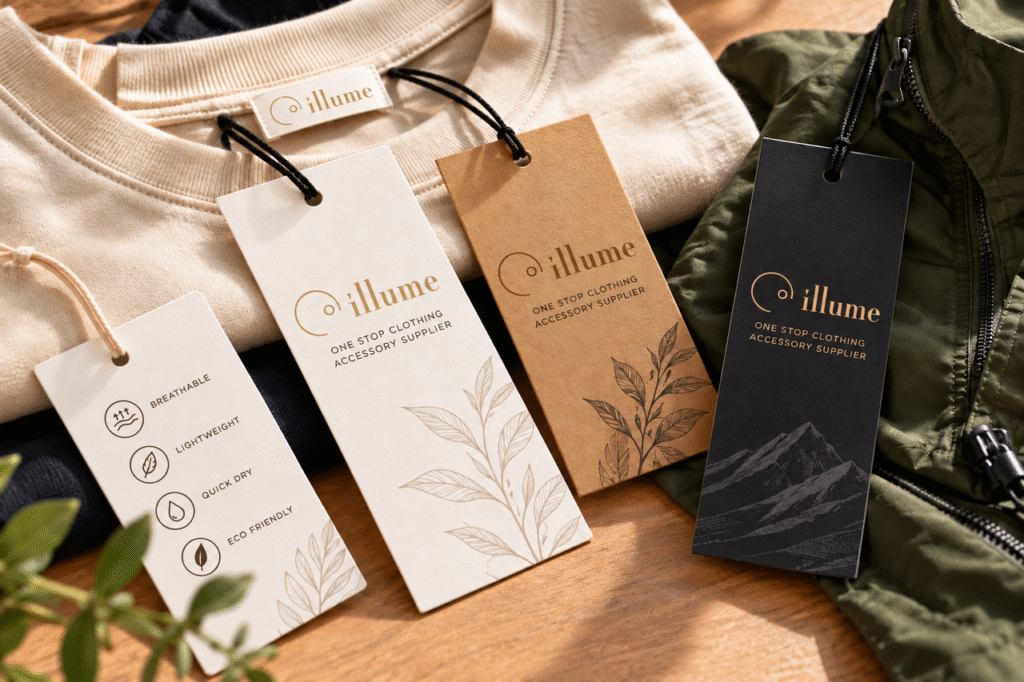
Product labels and tags are no longer just product identifiers. They have become an essential part of sustainable sourcing, ESG implementation, and supply chain transparency for global apparel, textile, outdoor, sportswear, and consumer product brands.
As international sustainability regulations continue to evolve, procurement teams are increasingly expected to source environmentally responsible materials while ensuring product quality, regulatory compliance, and supplier accountability.
This article explains how GRS-certified recycled materials and FSC-certified paper can support sustainable product identification, introduces five commonly used eco-friendly materials, and reviews international testing standards that help brands build resilient and compliant supply chains.
Why GRS and FSC Certifications Matter for Sustainable Product Identification
Many global brands now require suppliers to provide certified sustainable materials for product identification components, including care labels, hang tags, woven labels, price tags, and packaging stickers.
Although GRS and FSC are both sustainability certifications, each addresses different aspects of responsible sourcing.
GRS (Global Recycled Standard)
GRS verifies:
- Recycled material content
- Material traceability
- Chain of custody
- Chemical management
- Social responsibility
- Environmental practices
It is commonly applied to recycled polyester (rPET), recycled nylon, and other recycled synthetic materials.
FSC (Forest Stewardship Council)
FSC ensures paper materials originate from responsibly managed forests through a certified Chain of Custody (CoC).
Typical applications include:
- Paper hang tags
- Packaging cards
- Barcode labels
- Paper release liners
- Packaging stickers
For procurement managers, selecting certified materials improves supplier compliance, reduces environmental risks, and supports ESG reporting.
Five Sustainable Label and Tag Materials That Meet GRS and FSC Requirements
Selecting the right material depends on product requirements, durability expectations, and environmental objectives.
- GRS Recycled Polyester Care Labels: Manufactured from recycled PET bottles (rPET), these labels provide durability similar to conventional polyester and are widely used in sportswear, workwear, and functional apparel.
- FSC-Certified Recycled Paper Hang Tags: These hang tags support responsible forest management while providing excellent print quality and international market acceptance.
- Recycled Kraft Paper Hang Tags: Recycled kraft paper minimizes bleaching processes and offers a natural appearance, making it popular among brands promoting minimalist and sustainable product design.
- GRS Recycled Polyester Woven Labels: Using recycled polyester for woven labels allows brand logos and decorative labels to align with sustainability commitments without sacrificing quality.
- FSC Eco-Friendly Paper Stickers: Suitable for package sealing, barcode identification, and promotional labels while maintaining environmentally responsible packaging.
International Testing Standards for Sustainable Labels and Tags
Environmental benefits alone are insufficient if materials cannot withstand real-world use.
Procurement teams should evaluate suppliers using internationally recognized testing standards.
| Testing Item | Standard | Application | Procurement Focus |
|---|---|---|---|
| Recycled Material Content | GRS 4.0 | Polyester / Nylon | Verify recycled percentage and Transaction Certificate (TC) |
| Forest Chain of Custody | FSC-STD-40-004 | Paper Materials | Verify complete CoC documentation |
| Color Fastness to Washing | ISO 105-C06 | Care Labels | Recommended Grade 4 or above |
| Tensile Strength | ASTM D2256 | Hang Tag Strings | Prevent breakage during handling |
| Attachment Strength | ASTM D4846 | Label Attachment | Prevent accidental detachment |
| Quality & Environmental Management | ISO 9001 / ISO 14001 | Manufacturing Suppliers | Assess management capability |
Note: Testing values are for general industry reference. Actual specifications should always follow customer requirements, product design, and target market regulations.
Comparison of Sustainable Label Materials
| Material | Certification | Main Benefit | Recommended Test | Typical Application |
|---|---|---|---|---|
| rPET Care Labels | GRS | Wash durability | ISO 105-C06 | Sportswear |
| FSC Paper Hang Tags | FSC | Premium appearance | ASTM D2256 | Apparel |
| Recycled Kraft Paper | FSC | Natural texture | Tear Strength Test | Sustainable Brands |
| Recycled Woven Labels | GRS | Consistent branding | Color Fastness | Premium Apparel |
| Conventional Polyester Labels | None | Lower cost | — | Standard Products |
Note: Procurement teams should request updated certification documents, batch inspection reports, and implement Statistical Process Control (SPC) to monitor production consistency.
Building an ESG Procurement Strategy
Integrating GRS-certified recycled materials and FSC-certified paper into product identification supports both sustainability objectives and business performance.
When combined with ISO 9001 Quality Management and ISO 14001 Environmental Management Systems, companies can:
- Improve ESG ratings
- Reduce supply chain risks
- Increase supplier transparency
- Strengthen brand credibility
- Meet international customer requirements
- Support sustainable sourcing initiatives
Procurement teams should also request Transaction Certificates (TC) and perform routine sampling inspections, including wash durability and tensile testing, to ensure environmentally friendly materials meet physical performance requirements.
Scientific quality management combined with internationally recognized certifications enables brands to transform sustainability into long-term competitive advantage.
Frequently Asked Questions (FAQ)
What is GRS certification?
GRS (Global Recycled Standard) verifies recycled material content, supply chain traceability, chemical management, environmental practices, and social responsibility.
What is FSC certification?
FSC (Forest Stewardship Council) certifies that paper products originate from responsibly managed forests through a verified Chain of Custody system.
Which products can use GRS-certified materials?
Common applications include care labels, woven labels, recycled polyester fabrics, webbing, packaging materials, and textile accessories.
Why are testing standards important for sustainable labels?
International testing standards verify durability, color fastness, tensile strength, and attachment performance, helping reduce product failures and customer complaints.
How can procurement teams verify sustainable materials?
Procurement teams should request supplier certifications, Transaction Certificates (TC), batch inspection reports, and verify compliance with ISO, ASTM, GRS, and FSC standards.
Conclusion
Sustainable product identification has become an essential part of responsible sourcing and modern supply chain management. By selecting GRS-certified recycled materials and FSC-certified paper, supported by internationally recognized testing standards and robust quality management systems, brands can improve ESG performance, strengthen supplier compliance, reduce environmental impact, and build long-term competitiveness in global markets.
Illume Ltd. provides professional product testing and supply chain management services to help manufacturers and brands meet international quality and compliance requirements. (fees apply.)
References:
- ISO 105-C06 — Textiles — Tests for Color Fastness to Domestic and Commercial Laundering.
- ASTM D2256 — Standard Test Method for Tensile Properties of Yarns.
- ASTM D4846 — Standard Test Method for Fastener Attachment Strength.
Disclaimer: The testing methods, standards, and reference values presented in this article are intended for general industry reference only. Final specifications should always be confirmed according to product design, intended application, customer requirements, and applicable market regulations.