
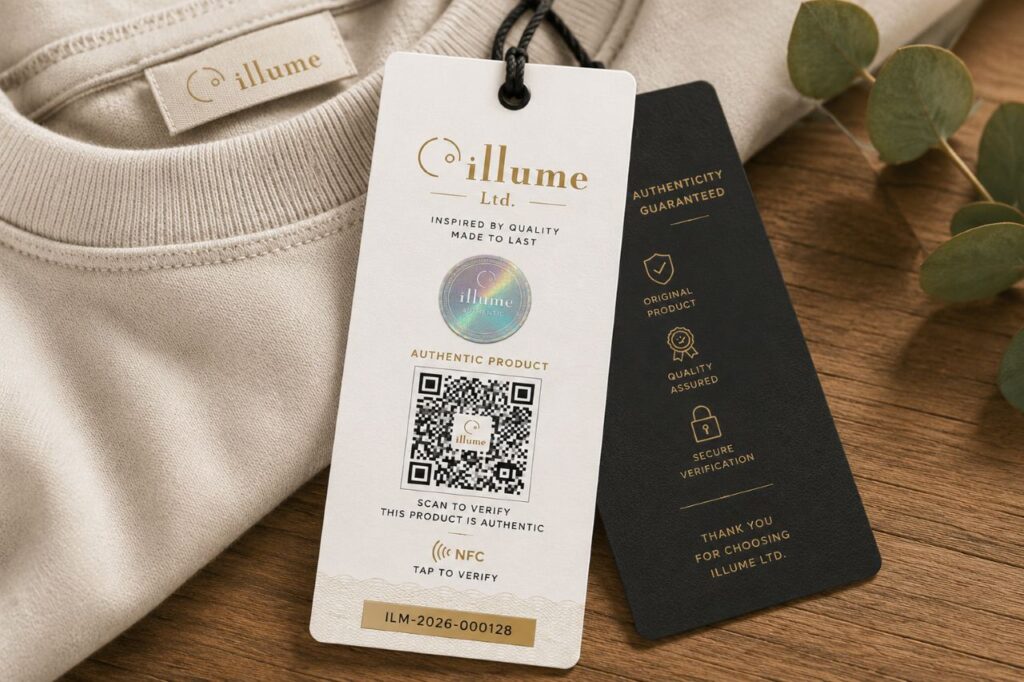
Hang Tags Traceability and Anti-Counterfeiting Technologies: This article introduces three digital hang tag solutions that combine QR Codes and NFC technology. By implementing unique item identification and NFC communication, brands can achieve transparent product traceability from manufacturing to retail. Combined with internationally recognized ISO standards, these solutions also help ensure hang tag quality and improve anti-counterfeiting performance.
Keywords: Hang Tag, QR Code, Digital Traceability, Anti-Counterfeiting Technology, Product Security Identification, ISO International Testing Standards
In the premium apparel and fashion accessories market, a hang tag is no longer just a label displaying size, material, and care instructions. It has become a critical carrier for brand authentication and supply chain traceability. As cross-border e-commerce and parallel imports continue to grow, counterfeit products have increasingly damaged brand reputation and disrupted inventory management. As a result, implementing digital anti-counterfeiting and traceability technologies has become an essential strategy for brand protection.
By integrating technologies compliant with ISO/IEC 18004 (QR Code Standard) and ISO/IEC 15693 (NFC Standard), brands can assign a unique identity to every product, enable dynamic authentication, and establish end-to-end logistics traceability through hang tags. This helps purchasing and quality control teams maintain consistent and auditable verification procedures during product inspection and after-sales service.
The Purpose of Hang Tags Traceability and Anti-Counterfeiting Technologies
Digital hang tags do more than prevent counterfeiting—they also improve supply chain efficiency. The primary objectives include:
- Consumer Authentication: Customers can scan a QR Code or tap an NFC tag to instantly verify product authenticity.
- Unique Digital Identity: Each product is linked to its production batch, origin, manufacturing process, and logistics information.
- Improved Purchasing and Quality Inspection: Distributors and retailers can quickly perform batch verification during receiving, reducing manual errors and unauthorized product diversion.
- Brand Data Analytics: Brands can monitor abnormal scanning activities, identify suspicious sales regions, and analyze consumer engagement in real time.
International Testing Standards and Hang Tag Quality Management
The effectiveness of digital technologies depends on the physical durability of the hang tag itself. If a hang tag is damaged during transportation or retail display, the digital information may become inaccessible. Therefore, international testing standards are essential to ensure the quality and durability of the physical carrier.
Table 1. International Testing Standards for Digital Hang Tags
| Testing Standard | Test Item | Application and Purpose | Significance for Purchasing and Quality Control |
|---|---|---|---|
| ISO 9227 | Salt Spray Test | Evaluates the corrosion resistance of metal components and printed surfaces. | Ensures traceability labels remain readable despite logistics conditions and environmental exposure. |
| ASTM D2061 | Mechanical Strength Test | Measures the tensile strength of hang tag fasteners and attachment components. | Prevents digital tags from detaching during transportation, maintaining complete traceability information. |
| ISO/IEC 18004 | QR Code Specification | Defines QR Code structure, encoding methods, and error correction levels. | Ensures QR Codes remain clear and readable across different scanning devices. |
| ISO/IEC 15693 | NFC Communication Standard | Defines communication protocols and operating distance for contactless NFC devices. | Ensures stable NFC interaction when embedded in apparel hang tags. |
Regarding the choice of NFC standard: For garment hangtag applications, considering consumer scanning convenience and batch receiving efficiency in warehouse logistics, this solution recommends the use of ISO/IEC 15693 (vicinity standard). Compared to the ISO/IEC 14443 standard typically used for access control cards, ISO/IEC 15693 offers a more forgiving read range and angle, effectively reducing failure rates caused by imprecise positioning while ensuring operational stability within logistics environments.
Note: The recommended standards and testing values are provided for general industry reference only. Actual specifications should be determined according to product design, application requirements, and brand technical standards.
Comparison of Three Digital Anti-Counterfeiting Hang Tag Solutions
Different brands have different security requirements and budgets. The following comparison helps organizations select the most appropriate digital solution while applying the relevant international testing standards during product acceptance.
Table 2. Comparison of Digital Anti-Counterfeiting Hang Tag Technologies
| Solution | Core Technology | Anti-Counterfeiting Level | Key Purchasing Inspection Items | Recommended Applications |
|---|---|---|---|---|
| Solution 1: Static QR Code | Security printing with QR Code | Medium | Print contrast, abrasion resistance | Mid-range apparel and basic product lines |
| Solution 2: Dynamic Unique QR Code | Cloud-based real-time authentication | High | QR Code readability, serial number randomness | Premium products, limited editions, collaboration collections |
| Solution 3:
NFC Smart Hang Tag |
Encrypted NFC chip | Very High | Reading distance, mechanical durability | Luxury products and high-value collectibles |
Technical Overview and Quality Control Recommendations
- Static QR Code: Suitable for brands introducing entry-level anti-counterfeiting solutions. Security printing techniques such as background patterns or specialty inks can increase duplication difficulty. Quality control should focus on print quality, ensuring the QR Code complies with ISO/IEC 18004 and maintains sufficient contrast for reliable scanning.
- Dynamic Unique QR Code: Every product receives an independent serial number, allowing the cloud system to detect duplicate scans and suspicious activities. This solution is particularly valuable for purchasing managers seeking to strengthen supply chain audits and establish measurable anti-counterfeiting performance indicators within supplier agreements.
- NFC Smart Hang Tags: NFC chips provide a unique digital identity that is extremely difficult to duplicate. During implementation, ASTM D2061 mechanical strength testing should be considered to ensure embedded NFC chips remain functional after sewing, handling, packaging, and regular product use, preserving long-term digital identity stability.
Integrated Strategy for Purchasing and Quality Control
From a management perspective, integrating anti-counterfeiting technologies with a Quality Management System (ISO 9001) is essential for establishing a sustainable product authentication program. Purchasing and quality control teams are encouraged to include these technical standards within supplier specifications and conduct the following procedures on a regular basis:
- Supplier Audits: Verify that hang tag suppliers have the capability to perform essential physical tests such as ISO 9227 Salt Spray Testing and ASTM D2061 Mechanical Strength Testing.
- Batch Inspection and Sampling: Conduct routine sampling tests on digital hang tags to evaluate reading performance and mechanical durability, ensuring the integrity of the digital traceability system.
By combining digital identification technologies with rigorous international testing standards, brands can not only reduce the risk of counterfeit products but also provide consumers with a reliable and engaging digital experience, ultimately strengthening brand credibility.
Illume Ltd. provides professional product testing and supply chain management services to help customers ensure their products comply with global quality inspection standards (fees apply).
References
- ISO 9227: Corrosion resistance testing for metal components to ensure the durability of digital traceability identifiers under harsh environmental conditions.
- ASTM D2061: Mechanical strength testing for attachment components to ensure the reliability of hang tags carrying digital product information.
⚠️ Note: The testing methods, recommended standards, and data referenced in this article are based on common industry practices and are provided for reference only. Actual requirements should always be determined according to product design, intended application, and individual brand technical specifications.