
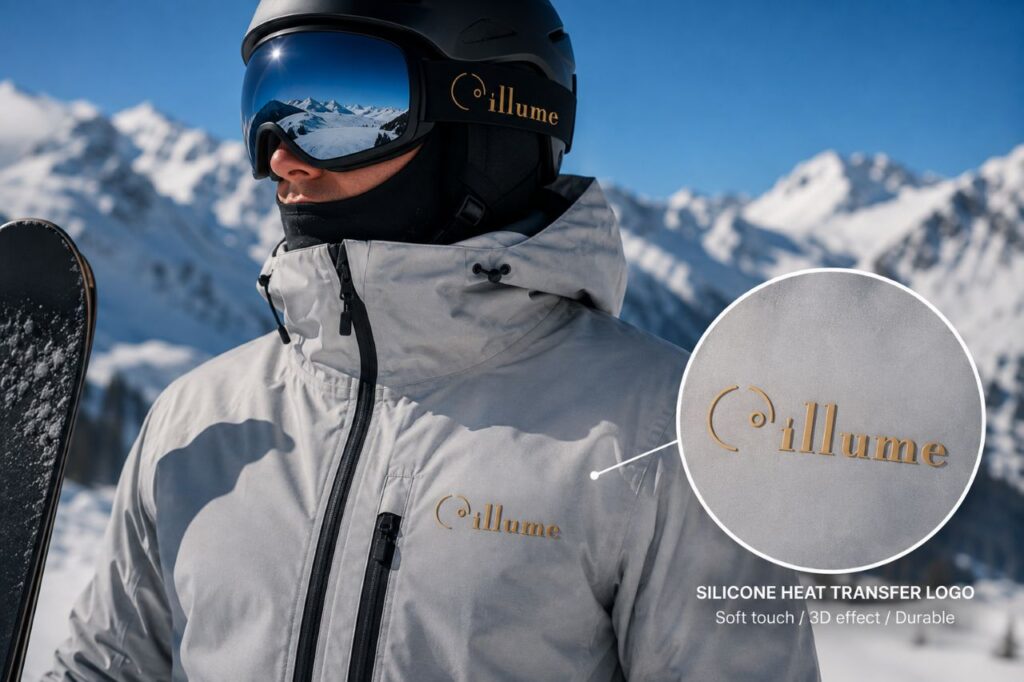
Discover the differences between TPU, PU, and silicone heat transfer labels for apparel applications. Compare durability, flexibility, weather resistance, and production costs, while understanding ISO 9227 and ASTM D2061 testing standards to help apparel brands and procurement professionals select the right heat transfer label material.
Primary Keywords: Heat Transfer Labels, Heat Transfer, TPU, PU, Silicone, Material Comparison
Why Is Material Selection Important for Heat Transfer Labels?
Heat transfer labels have become one of the most widely used branding solutions for sportswear, functional apparel, outdoor clothing, and premium fashion products. Compared with traditional woven labels and sewn rubber patches, heat transfer labels provide a cleaner appearance, improved wearing comfort, and greater design flexibility.
For apparel manufacturers, sourcing specialists, and product development teams, selecting the right material affects much more than appearance. It directly influences abrasion resistance, weather resistance, flexibility, wash durability, long-term product performance, and customer satisfaction.
Establishing standardized material selection criteria at the beginning of product development can help reduce quality risks, improve supply chain consistency, and enhance overall brand value. This guide compares the three most common heat transfer label materials—TPU, PU, and silicone—using three essential evaluation factors.
Why Have Heat Transfer Labels Become the Preferred Choice for Premium Apparel?
Unlike traditional woven labels that require sewing, heat transfer labels are permanently bonded to the fabric through heat and pressure. This eliminates stitching around the label area, significantly improving wearer comfort while creating a cleaner and more premium appearance.
Typical applications include:
- Sportswear and activewear logos
- Yoga apparel branding
- Outdoor jackets and shell jacket logos
- Down jackets and compression garments
- Swimwear branding
- Caps and hats
- Bags and backpacks
- Lifestyle apparel branding
Every apparel category requires different levels of flexibility, thickness, three-dimensional appearance, and durability. Therefore, selecting the appropriate material should always be based on product positioning and expected performance rather than cost alone.
PU vs. PU vs. Silicone Heat Transfer Label Comparison
The following comparison provides procurement professionals with a quick overview of the strengths of each material.
| Performance Factor | TPU | PU | Silicone |
|---|---|---|---|
| Flexibility | Excellent | Moderate | High |
| Abrasion Resistance | High | Moderate | Excellent |
| Weather & Hydrolysis Resistance | Good | Moderate | Outstanding |
| Three-Dimensional Appearance | Good | Moderate | Excellent |
| Relative Material Cost | Medium | Lower | Higher |
TPU Heat Transfer Labels: Excellent Durability and Balanced Performance
TPU (Thermoplastic Polyurethane) is one of the most widely adopted materials in premium sportswear because it offers an excellent balance of strength, flexibility, and durability.
Material Characteristics
- Excellent abrasion resistance
- High tensile strength
- Outstanding flexibility
- Good bending resistance
- Stable dimensions after heat transfer
- Available in matte or glossy finishes
Recommended Applications
TPU is particularly suitable for products that experience frequent washing and repeated stretching, including:
- Running apparel
- Compression garments
- Outdoor functional clothing
- Training apparel
- Cycling apparel
Its balanced performance makes TPU one of the most versatile materials for high-performance garments.
PU Heat Transfer Labels: Lightweight and Cost-Effective
PU (Polyurethane) is widely used in fashion apparel due to its excellent processing capability, lightweight structure, and competitive cost.
Material Characteristics
- Softer than TPU
- Lightweight
- Fine surface texture
- Excellent production efficiency
- Suitable for high-volume manufacturing
Recommended Applications
PU is commonly selected for:
- Fashion apparel
- Casual wear
- Fast fashion collections
- Lifestyle clothing
- Promotional garments
Although its long-term weather resistance is generally lower than silicone, PU provides excellent value for everyday apparel used in indoor or casual environments.
Silicone Heat Transfer Labels: Premium Appearance and Outstanding Weather Resistance
Silicone heat transfer labels have become increasingly popular among luxury brands and professional outdoor manufacturers because of their premium appearance and excellent physical stability.
Material Characteristics
- Soft-touch surface
- Superior UV resistance
- Excellent weather resistance
- Outstanding hydrolysis resistance
- High and low temperature resistance
- Strong three-dimensional appearance
- Excellent color stability
Recommended Applications
Silicone is ideal for products exposed to harsh outdoor environments, including:
- Outdoor apparel
- Ski wear
- Diving equipment
- Mountaineering gear
- Premium sportswear
- Luxury apparel
Because silicone maintains its appearance over extended periods, it is often selected for premium products where durability and brand image are equally important.
International Testing Standards for Heat Transfer Labels
The following international standards are commonly used to evaluate the quality and durability of heat transfer labels throughout the apparel supply chain.
| Test Item | International Standard | Purpose |
|---|---|---|
| Corrosion and Environmental Simulation | ISO 9227 | Evaluates environmental durability and appearance stability |
| Tensile Strength Test | ASTM D2061 | Measures peel strength and mechanical performance between the label and fabric |
| Domestic Washing Test | ISO 6330 | Evaluates wash durability, colorfastness, and edge lifting |
| Light Colorfastness | AATCC TM16 | Measures color stability after long-term UV exposure |
Note: The testing standards and reference values listed above are provided for general industry reference only. Actual specifications should always be determined according to product design, intended application, and brand technical requirements.
Understanding International Testing Standards
Material selection should always be supported by objective testing rather than appearance alone.
ISO 9227 evaluates corrosion and environmental durability by exposing products to controlled salt spray conditions. Although originally developed for corrosion testing, it is often referenced when evaluating the environmental durability of complete apparel accessories used in demanding outdoor conditions.
ASTM D2061 measures mechanical strength and attachment performance. While originally developed for zipper strength testing, similar tensile and structural evaluation methods are frequently referenced when assessing bonded apparel components and attachment reliability.
ISO 6330 evaluates product performance after repeated domestic laundering, helping manufacturers identify issues such as edge lifting, peeling, cracking, or discoloration.
AATCC TM16 measures resistance to ultraviolet light exposure, making it especially valuable for outdoor sportswear and performance apparel.
How Procurement Teams Should Compare These Materials
Each material offers distinct advantages depending on product positioning.
TPU provides one of the best balances between durability, flexibility, and wash resistance, making it ideal for functional sportswear.
PU is an economical solution for fashion brands seeking lightweight products and efficient mass production.
Silicone offers superior weather resistance, premium appearance, and long-term durability, making it the preferred material for luxury brands and high-performance outdoor products.
Instead of comparing only material cost, procurement teams should evaluate the total lifecycle cost, expected product environment, customer expectations, warranty risk, and long-term brand positioning.
Procurement Strategies for Heat Transfer Label Material Selection
Evaluate Total Product Lifecycle
Successful sourcing decisions should consider:
- Product durability
- Outdoor performance
- Brand positioning
- Manufacturing consistency
- Long-term maintenance costs
Use International Testing Standards During Supplier Qualification
Suppliers should be evaluated through standardized testing, including:
- ISO 9227
- ASTM D2061
- ISO 6330
- AATCC TM16
Testing results help verify manufacturing consistency while reducing quality variation across production batches.
Transform Laboratory Data into Production Standards
Testing should be viewed as a continuous improvement tool rather than merely a final inspection requirement.
Problems such as peeling, edge lifting, or discoloration often indicate improper transfer temperature, bonding pressure, adhesive formulation, or process control. Developing standardized operating procedures (SOPs) based on laboratory data can significantly improve product consistency throughout the manufacturing process.
Conclusion
There is no single “best” material for every apparel application. TPU, PU, and silicone heat transfer labels each provide unique advantages depending on the product’s intended use, durability requirements, brand positioning, and budget.
By combining standardized material selection with internationally recognized testing methods such as ISO 9227 and ASTM D2061, apparel brands and procurement professionals can improve product quality, reduce supply chain risks, and create more durable and comfortable products for global markets.
Illume Ltd. provides professional product testing and supply chain management services to help customers meet global quality inspection standards (fees apply).
References
- ISO 9227 — Corrosion Tests in Artificial Atmospheres — Salt Spray Tests.
- ASTM D2061 — Standard Test Methods for Strength Tests for Zippers and Related Closures (commonly referenced for structural evaluation of bonded apparel components).
⚠️ Disclaimer: The testing methods, suggested standards, and reference values mentioned in this article are based on common industry practices and are provided for reference only. Actual specifications should be determined according to product design, intended application, customer requirements, and individual brand technical standards.