
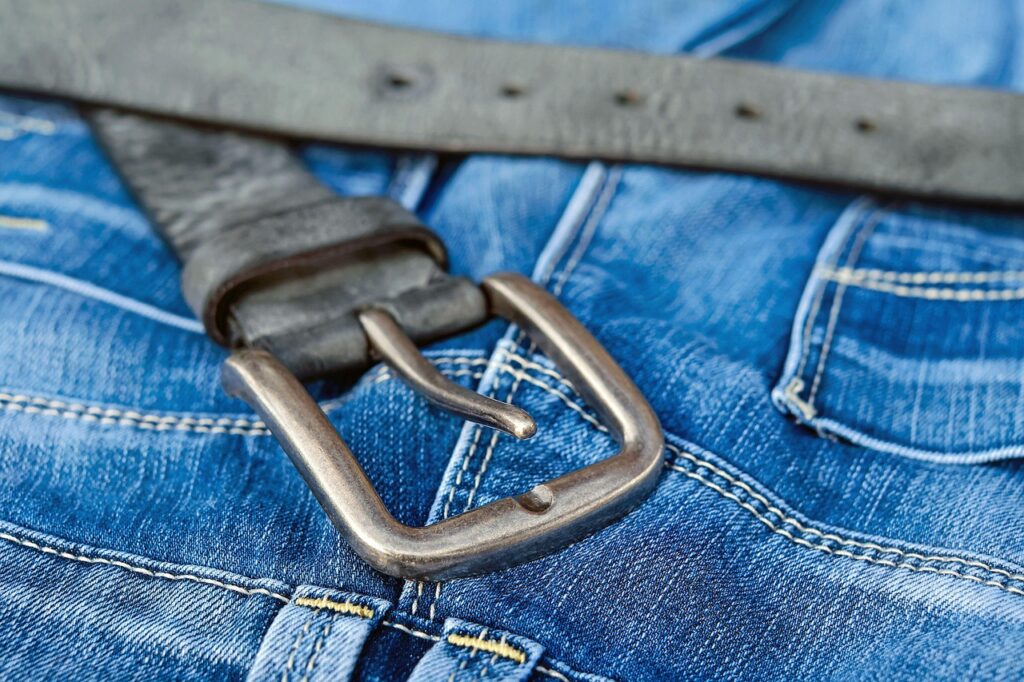
In premium leather goods and high-end fashion accessories, belt buckles are continuously exposed to repeated fastening friction, external impacts, dust abrasion, and environmental corrosion. Common consumer issues such as scratches, dullness, and coating peeling are rarely accidental defects. Instead, they are typically caused by insufficient surface hardness, poor coating adhesion, and lack of proper validation through daily friction testing.
Keywords: Belt buckle, wear resistance, surface hardness standard, durability, daily friction testing
Sources of Daily Friction & Failure Mechanisms:
Key Analysis for Belt Buckle Wear Resistance
In real-world usage, wear on belt buckles mainly comes from three scenarios:
First, repeated contact between the prong and belt holes creates localized pressure and micro-sliding. If the surface hardness does not meet standards, scratches can easily form.
Second, long-term friction with fabrics such as denim represents a typical low-load, high-cycle wear condition, gradually eroding protective coatings.
Third, impacts from hard objects and environmental exposure—such as contact with desks or door handles—introduce sudden stress, causing micro-cracks in the coating and leading to subsequent oxidation.
Practical testing results (for reference only) indicate that:
- When surface hardness reaches HV ≥ 200, buckles can withstand over 5,000 friction cycles, with significantly improved appearance retention.
- Products below HV 150 show a much higher risk of coating failure after several months of frequent use.
International Testing Standards for Belt Buckle: Hardness, Wear, Adhesion & Durability
The following table summarizes key surface hardness standards and international testing methods essential for global quality compliance.
Table 1: Comparison of International Testing Standards
| Test Item | Standard | Purpose | Evaluation Criteria (Reference Only) |
|---|---|---|---|
| Surface / Coating Microhardness | ISO 14577 / ASTM E384 | Verify scratch & micro-cutting resistance | HV ≥ 200 or HK level |
| Metal Wear Behavior | ASTM G99 (Pin-on-Disk) | Simulate real metal sliding wear | Weight loss < 2%, scratch < 0.05 mm |
| Taber Abrasion (Modified) | ASTM D4060 | Simulate high-cycle fabric friction | 500 g, ≥1000 cycles, no visible damage |
| Coating Adhesion | ISO 2409 / ASTM D3359 | Prevent coating peeling | 5B (no detachment) |
| Salt Spray Corrosion | ISO 9227 / ASTM B117 | Evaluate corrosion resistance | No red rust after 48 h, hardness loss < 5% |
Technical Explanation & Extended Insights
- Advanced Application of ASTM G99 (Pin-on-Disk Wear Test)
This method uses a fixed-load pin against a rotating disk to simulate metal-to-metal sliding friction. For belt buckles, it accurately reflects coating durability under real-use conditions. Unlike general abrasion tests, ASTM G99 also tracks friction coefficient changes, allowing engineers to predict coating failure points and potential delamination. - Environmental Simulation via Taber Abrasion (ASTM D4060)
To replicate real-life denim wear, modified Taber testing is commonly applied. With a 500 g load and over 1000 cycles, this method evaluates whether lacquer or thin plating achieves the right balance between hardness and toughness. If substrate exposure occurs, it indicates insufficient wear resistance for long-term use. - Critical Standard for Coating Adhesion
ISO 2409 cross-cut testing is widely recognized as one of the strictest adhesion evaluations. A 5B rating means perfectly smooth edges with no coating removal. For belt buckles subjected to repeated opening and closing, this is essential not only for aesthetics but also to prevent corrosive agents from penetrating the substrate. - Salt Spray Corrosion & Hardness Stability
While ISO 9227 is traditionally used for corrosion testing, high-end applications also assess post-corrosion hardness retention. A significant drop in hardness after testing indicates a porous coating structure, which may fail in high-humidity environments over time.
Material × Hardness × Durability Comparison: Balancing Quality & Sustainability
Material selection and surface treatment directly affect the lifecycle and market positioning of belt buckles.
Table 2: Material & Surface Treatment Durability Comparison
| Material | Surface Treatment | Hardness (HV) | Wear Cycles (Reference) | Corrosion Resistance | Cost / Positioning |
|---|---|---|---|---|---|
| Zinc Alloy | Electroplating | 150–200 | 3,000–5,000 | ★★★☆☆ | Economic / Fast Fashion |
| Brass | Lacquer / Plating | 180–220 | ~4,000 | ★★★★☆ | Mid–High / Classic |
| Stainless Steel 316L | Electropolishing | 200–250 | >5,000 | ★★★★★ | Premium |
| Titanium Alloy | PVD Coating | 1500+ | >10,000 | ★★★★★ | Luxury / Professional |
In-Depth Material Insights
- Zinc Alloy Limitations
With a base hardness of only 80–100 HV, zinc alloy relies heavily on multi-layer electroplating to achieve durability. Uneven current density during plating can lead to insufficient thickness, causing rapid coating failure under frequent friction. - Advantages of Stainless Steel 316L
Stainless steel offers uniform hardness throughout the material. Even when deeply scratched, it does not expose a corrosion-prone substrate. It is an ideal solution for brands seeking durability and reduced environmental impact, as no plating is required. - Revolutionary PVD Coating Technology
Titanium alloy with PVD (Physical Vapor Deposition) achieves extremely high hardness (HV 1500+). This significantly improves product lifespan by over 50%, while also offering an environmentally friendly process—making it highly attractive for ESG-driven and sustainable brands.
Quality Control & Process Management: Implementation of ISO Systems
To ensure consistent wear resistance performance, integration of ISO systems is essential:
- ISO 9001 Quality Management
- IQC: Incoming material inspection (monitor base hardness)
- IPQC: Process control (stabilize electroplating/PVD parameters)
Ensures batch consistency and prevents quality variation.
- ISO 14001 Environmental Management
Adoption of eco-friendly processes such as PVD reduces hazardous waste and enhances oxidation resistance. Material innovation has become a key differentiator for modern brands. - Pre-Market Validation Testing
Recommended combined testing (reference only):- 1000 opening/closing cycles
- Taber abrasion test
- 24-hour salt spray test
This approach simulates extreme conditions and helps predict product performance over a 2–3 year lifecycle.
Conclusion
The wear resistance and durability of belt buckles depend on a systematic combination of surface hardness standards, coating adhesion, real-world friction testing, and corrosion validation. By applying international standards and selecting materials with HV ≥ 200 along with appropriate surface treatments, coating failure caused by daily friction can be effectively minimized.
Integrating ISO quality and environmental management systems further enhances product reliability and brand value from the design stage.
Illume Ltd. provides professional product testing and supply chain management services to help ensure compliance with global quality standards (fees apply).
References
- ASTM G99 — Pin-on-Disk Wear Test
- Taber Abrasion — ASTM D4060
⚠️ Note: The testing methods and data mentioned in this article are based on common industry practices for reference only. Actual specifications should be determined according to product design, application, and brand-specific technical requirements.