
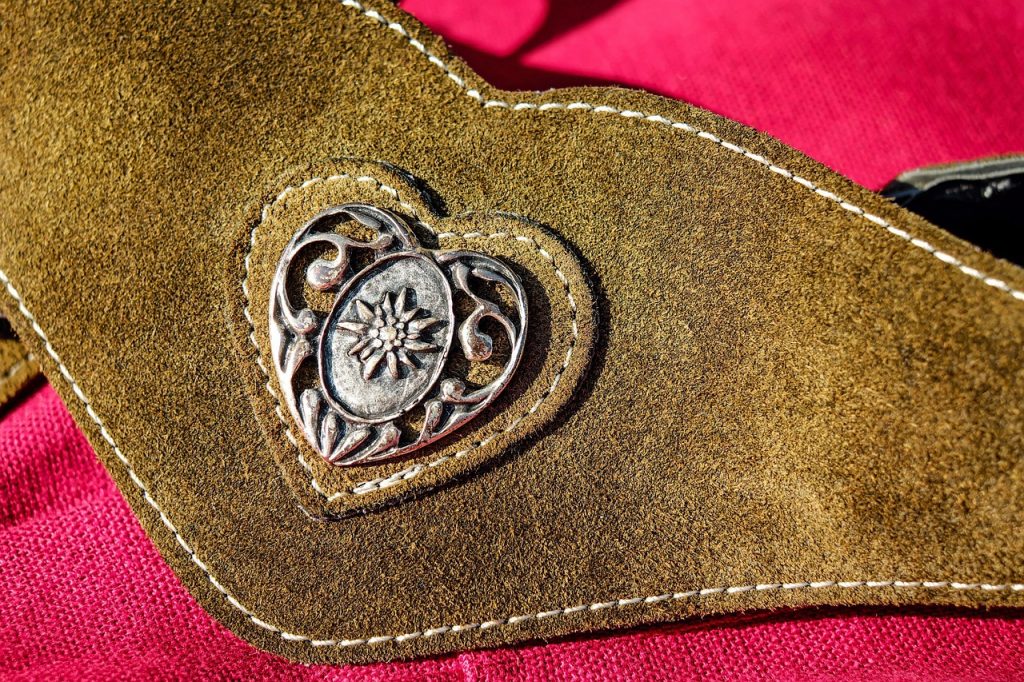
In the development process of metal buckles (Hardware Parts ex. metal buttons, logo plates), die casting and stamping are among the most commonly used manufacturing methods. However, they are also often underestimated during the early design stage in metal process comparisons. These two processes not only affect the appearance and structural performance of parts, but also directly determine tooling investment, unit cost, dimensional accuracy, surface quality, and post-processing complexity.
By understanding the technical limitations and cost structures of these processes at the design stage, product development and procurement decisions can be optimized simultaneously. This also helps ensure compliance with ISO 9001 quality management and ISO 14001 environmental management requirements.
Keywords: Metal buckles, Die Casting, Stamping, Metal Process Comparison,
Metal Buckles Die Casting & Stamping -Process Principles and Application Scenarios
- Die Casting involves injecting molten metal (such as zinc, aluminum, or magnesium alloys) into a mold under high pressure to form complex 3D structures in a single operation. It is suitable for intricate geometries, internal threads, and integrated components.
- Stamping uses a press machine and tooling to apply force to metal sheets, causing plastic deformation. With progressive dies, multiple operations such as punching, forming, and bending can be completed efficiently. It is ideal for thin-walled, uniform-thickness, and high-strength parts.
Both processes rely heavily on tooling design. However:
- Die Casting focuses on molten metal flow, venting, and solidification shrinkage
- Stamping focuses on material unfolding, springback compensation, and tool wear
At the design stage, clearly defining load direction, appearance requirements, and annual production volume helps ensure a more accurate process selection and better control over quality and cost.
Product Characteristics Comparison
| Item | Die Casting | Stamping | Recommended Scenario |
|---|---|---|---|
| Materials | Zinc, aluminum, magnesium alloys | Stainless steel, cold-rolled steel, copper | Complex lightweight parts → Die casting;
Thin high-strength parts → Stamping |
| Complexity | Very high (3D, internal features) | Medium (uniform thickness, multi-step forming) | Complex integrated parts → Die casting |
| Dimensional Accuracy | ±0.05–0.10 mm (depending on tooling/material) | ±0.02–0.05 mm | High-precision thin parts → Stamping |
| Surface Roughness | Better, suitable for cosmetic surfaces | Requires deburring or finishing | Appearance parts → Die casting |
| Material Utilization | Runners recyclable | Scrap generated but recyclable | Both manageable with recycling systems |
| Structural Strength | Integrated one-piece structure | Good ductility and fatigue resistance | Thin structural parts → Stamping |
Die casting enables multiple features to be integrated into a single part, reducing assembly and processing steps. It is advantageous for cosmetic, 3D, and functionally integrated components.
Stamping achieves high consistency and efficiency through progressive dies, making it ideal for mass production, sheet metal structures, and standardized parts.
If the design requires complex geometry and aesthetic appearance, die casting is generally preferred. If the requirement is thin, strong, fast production with high volume, stamping offers better cost efficiency.
Metal buckles International Testing Standards
| Test Category | Standard | Test Object | Purpose |
|---|---|---|---|
| Tensile Test | ISO 6892-1 / ASTM E8 | Metal specimens | Verify tensile strength, yield strength, elongation |
| Hardness Test | ISO 6507-1 (Vickers) / ASTM E384 (Microhardness) | Finished parts or specimens | Evaluate hardness and indirectly indicate wear resistance |
| Dimensional Tolerance | ISO 2768 / ISO 8062 | Finished parts | Control general and casting tolerances |
| Coating Thickness | ISO 2178 | Coatings (steel substrate) | Measure non-magnetic coating thickness on magnetic substrates |
| Hazardous Substances | RoHS / REACH | Materials & coatings | Ensure regulatory compliance and reduce supply chain risk |
ISO 6892-1 is used to evaluate fundamental mechanical properties of metals.
ISO 6507-1 is commonly applied for hardness testing.
ISO 2178 is suitable for measuring non-magnetic coatings on steel substrates.
ISO 2768 and ISO 8062 help control tolerances for machined and cast parts.
For non-magnetic substrates (such as aluminum or zinc die cast parts), XRF or metallographic cross-section analysis is recommended to verify coating thickness and uniformity.
* XRF: X-ray Fluorescence is a non-destructive analytical technique used to determine the elemental composition of materials (solids, liquids, and powders). It works by exposing a sample to high-energy X-rays, causing it to emit secondary (fluorescent) X-rays that are characteristic of the elements present.
If products are intended for export or brand certification, RoHS and REACH compliance should be integrated into material management at an early stage.
Metal Buckles Technical Challenges and Risks
Common challenges in die casting include shrinkage porosity, gas porosity, thermal imbalance, and higher deburring costs. Poor mold flow design may lead to flow marks, surface defects, or internal flaws. Additional CNC machining can further increase time and cost.
Stamping challenges mainly involve springback, wrinkling, tool wear, and cumulative tolerance errors. These issues become more critical when working with high-strength materials or high-precision components.
From an engineering management perspective:
- Die casting benefits from mold flow analysis, venting design, and thermal control
- Stamping relies on accurate blank development, tool compensation, and stable production cycles
Therefore, the decision is not simply about which process is cheaper, but about the total cost considering design complexity, production volume, tolerance requirements, and secondary processing.
Process Selection Recommendations
- Complex 3D appearance parts with high volume → Prefer die casting
- Thin, high-strength structural parts with high volume → Prefer stamping
- Low volume or early development → Stamping offers more flexible tooling investment
During prototyping, 3D printing or soft tooling can be used before transitioning to mass production molds, reducing development risk.
Applying a structured metal process comparison approach helps align with ISO 9001 process control and ISO 14001 material recycling requirements.
Conclusion
There is no absolute superiority between die casting and stamping. The choice depends on design requirements, material properties, production volume, and processing needs.
When product development, engineering, and procurement teams use a unified technical framework, process selection can be based on data and international standards, ultimately improving product quality consistency and market competitiveness.
Illume Ltd. provides professional product testing and supply chain management services to help your products meet global quality standards (paid service).
References
- ISO 6892-1: Metallic materials — Tensile testing
- ISO 2178: Non-magnetic coatings on magnetic substrates — Measurement of coating thickness
⚠️ Note: The testing methods and data mentioned in this article are based on common industry practices. Actual specifications should be confirmed according to product design, application, and brand requirements.