
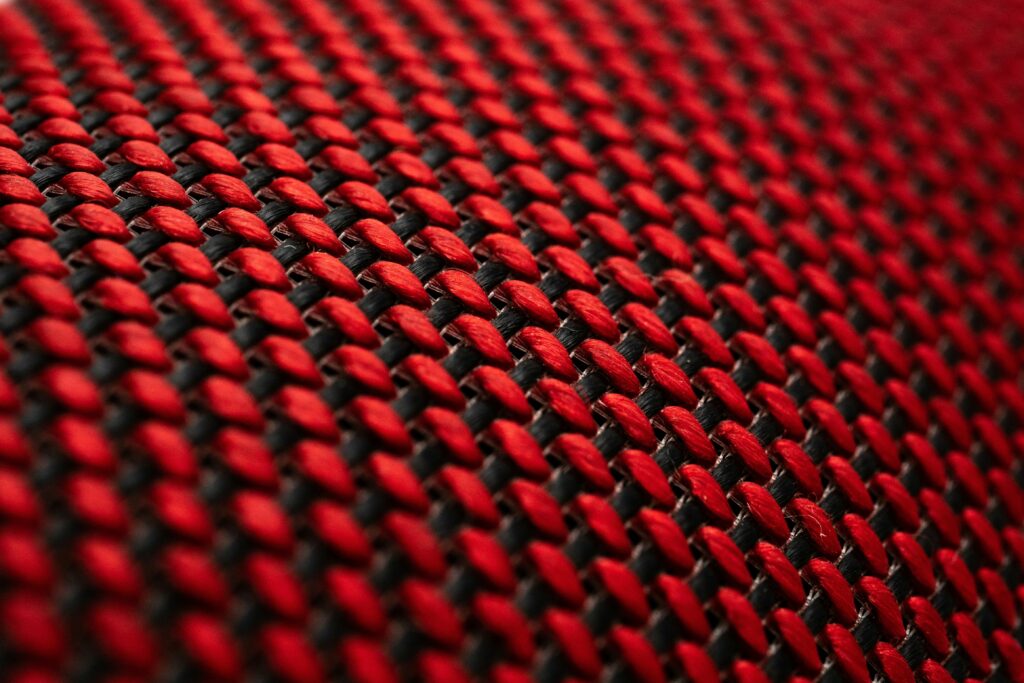
Explore the high-density weaving process of woven elastics. Understand how its abrasion resistance, tensile strength, and low elongation help prevent fatigue deformation in sports equipment under long-term high stress.
In the development of high-end sports equipment and heavy-duty industrial gear, material stability and durability directly impact product lifespan and safety. Among various elastic materials, woven elastics stands out due to its compact structure and stable load-bearing performance, making it a critical component for high-load applications.
Compared to conventional elastic materials, woven structures effectively reduce fatigue deformation and performance degradation under repeated stretching and compression over time. This makes them especially suitable for applications that require long-term tension resistance and durability in harsh environments. Through high-density weaving technology, this material not only enhances equipment durability but also provides reliable safety assurance for heavy-duty gear.
Keywords: woven elastic, high quality, sports equipment, heavy-duty gear, abrasion resistance, tensile strength, low elongation, fatigue deformation
Woven Elastics: Structural Advantages and Key Performance
High-quality woven elastic is produced using an interlacing warp and weft structure, fundamentally different from knitted construction. During the weaving process, warp and weft yarns intersect at right angles, tightly enclosing internal elastic fibers such as natural rubber or spandex.
This structure provides excellent lateral stability, preventing irregular width shrinkage or distortion under stress.
The high-density weaving process delivers three key advantages:
- High Tensile Strength: The tight yarn structure enables the material to withstand significant force, forming the foundation of safety in heavy-duty applications.
- Low Elongation: The woven structure restricts excessive stretching, ensuring dimensional stability under load.
- Excellent Abrasion Resistance: A dense and smooth surface resists wear from repeated friction, making it ideal for outdoor and fitness equipment.
For manufacturers operating under ISO 9001 quality management systems, controlling weaving density and yarn tension consistency is essential to ensure stable batch quality, directly influencing market competitiveness.
International Testing Standards and Quality Verification
In global supply chain management, data is the key metric for evaluating material performance. To ensure elastic components used in sports equipment meet safety requirements, they must undergo rigorous physical testing. These tests validate both initial strength and long-term performance degradation.
Table 1: International Testing Standards Comparison
| Test Item | Standard Reference | Purpose | Suggested Reference Values* |
|---|---|---|---|
| Tensile Strength | ASTM D5034 / ISO 13934-1 | Measure maximum force and elongation | Industrial ≥ 800N / Sports ≥ 500N |
| Cyclic Fatigue Test | ISO 20932-1 / ASTM D4964 | Evaluate elasticity recovery and permanent deformation | ≥ 90% recovery after 5,000 cycles |
| Abrasion Resistance | ASTM D4966 (Martindale) | Assess surface durability | ≥ 20,000 cycles without damage |
*Note: Suggested standards and values are for reference only and should be adjusted based on application.
Detailed Explanation of Key Tests
- ASTM D5034 (Grab Test):
This test measures the load-bearing capacity of woven elastic. For applications such as resistance bands or safety systems, tensile strength above 800N significantly reduces the risk of catastrophic failure. - ISO 20932-1 (Cyclic Fatigue Test):
Elastic fatigue is a core challenge for elastic materials. This test simulates repeated stretching over thousands of cycles to evaluate permanent deformation. High-quality products must retain near-original elasticity even after 5,000 cycles.
Product Comparison Analysis
When selecting elastic materials, developers often compare woven, knitted, and braided options. For applications requiring high load capacity and precise control, woven elastic provides clear advantages.
Table 2: Comparison of Elastic Band Types
| Property | Woven Elastic | Knitted Elastic | Braided Elastic |
|---|---|---|---|
| Structural Stability | Very High | Medium | Medium |
| Tensile Strength | Excellent (heavy-duty use) | Moderate | Moderate |
| Elongation | Low (precise control) | High (more flexible) | Medium |
| Fatigue Resistance | Excellent | Lower | Moderate |
Extended Comparison Insights
Due to its dense structure, woven elastic offers longer service life and better impact resistance compared to knitted alternatives.
While knitted elastic is softer and more cost-effective, it tends to experience stress relaxation under continuous load, leading to gradual loss of function. Braided elastic provides a balance but does not match woven elastic in high-load stability.
Sustainability and ISO Perspective
In modern manufacturing, high quality also means compliance and sustainability. Industry experience shows that leading brands now include ISO 14001 environmental management systems as a key evaluation criterion when sourcing woven elastic.
Using eco-friendly processes—such as lead-free dyeing and recycled polyester fibers—and complying with standards like Oeko-Tex Standard 100 reduces chemical risks and enhances product value in global markets.
Ensuring compliance with pH and formaldehyde limits is also critical for brand responsibility. Through standardized environmental management, companies can better control wastewater discharge and energy consumption, achieving sustainable supply chain goals.
Conclusion
High-quality woven elastics play a critical role in high-end sports equipment and industrial applications. Its superior structural stability, durability, and resistance to fatigue deformation make it an essential material for heavy-duty gear.
By meeting international testing standards and implementing strict quality control, manufacturers can ensure reliable performance under demanding conditions while enhancing product longevity and market competitiveness.
Illume Ltd. provides professional product testing and supply chain management services to help your products comply with global quality standards (paid service).
References
- ASTM D5034 / ISO 13934-1 (Tensile Strength Test)
- ISO 20932-1 / ASTM D4964 (Cyclic Fatigue Test)
⚠️ Note: The testing methods and data mentioned in this article are based on common industry practices. Actual specifications should be confirmed according to product design, application, and brand technical standards.