
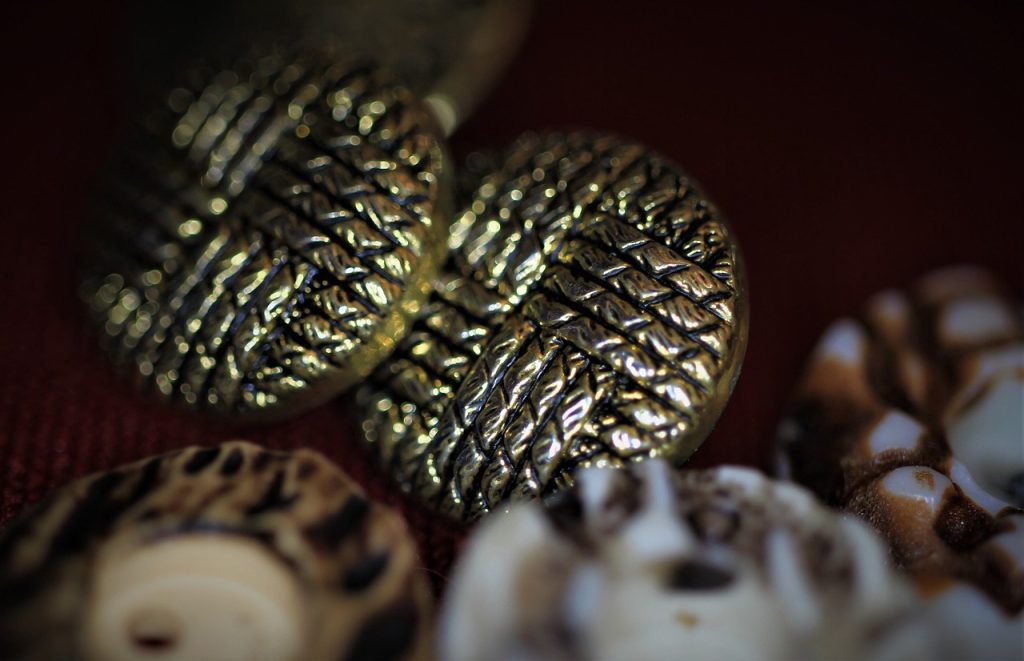
Keywords: Metal buttons, Brass Buttons, Zinc Alloy Logo Metal Buttons, Pure Copper Buttons, Zinc Alloy Logo Metal Plates, Metal Fasteners, Apparel Hardware Comparison
I. Introduction: The Essence of Hardware Material Selection
Pure Copper buttons (also called Brass buttons) and zinc alloy logo metal buttons represent the two ends of the high-end apparel hardware spectrum. The former symbolizes classic durability and premium tactile luxury, while the latter offers modern precision and cost efficiency.
At the crossroads of luxury heritage and fast fashion, material choices determine the product’s full lifecycle—from design aesthetics to functional durability. This article provides supply chain experts with a complete decision-making framework through physicochemical data, processing comparisons, and regulatory compliance guidelines.
Keywords: Brass Buttons, Zinc Alloy Logo Metal Buttons, Pure Copper Buttons, Zinc Alloy Logo Metal Plates, Metal Fasteners, Hardware Material Selection, Apparel Hardware Comparison
II. Comprehensive Analysis of Physical Properties
The fundamental atomic differences between brass and zinc alloy set the ceiling for their structural safety and visual presentation.
1. Brass: The Base of Classic Toughness
Pure Copper’s primary composition is Cu 65-68% with a density of 8.5g/cm³, delivering a solid hand-feel and high-end visual authority.
- Thermal Stability: A melting point of 930-1080°C makes it suitable for high-temperature post-processing.
- Toughness: With a hardness of HB 80 and 35% elongation, it exhibits ductile deformation upon fracture rather than brittleness—crucial for load-bearing bite-fit positions like rivets or snap fasteners.
- Self-Healing: Most importantly, copper oxidation forms a green patina (verdigris), a self-healing protective film that blocks further corrosion without heavy plating.
2. Zinc Alloy (Zamak 5): Lightweight Precision for Modern Industry
Zamak 5 is zinc-based (Zn 32-35%), alloyed with Al 4%. It has a density of 6.6g/cm³ (30% lighter than copper).
- Die-Casting Advantage: A low melting point (380-420°C) enables complex die-casting with a high precision of ±0.02mm.
- Brittleness Caution: While hardness reaches HB 100, elongation is only 7%, leading to brittle fractures under extreme stress.
- Protection Need: The surface is prone to “white rust” (zinc oxide), requiring a robust three-layer plating barrier to prevent structural embrittlement.
III. Core Performance Comparison Table
| Indicator | Pure Copper (65 Brass) | Zinc Alloy (Zamak 5) | Standard | Decision Impact |
| Density | 8.5g/cm³ (Solid) | 6.6g/cm³ (Lightweight) | – | Copper for luxury feel; Zinc for sportswear. |
| Melting Point | 930 – 1080°C | 380 – 420°C | ASTM E794 | Copper is high-temp stable; Zinc is easy to cast. |
| Hardness | HB 80 (Tough) | HB 100 (Hard) | Brinell Scale | Zinc is scratch-resistant; Copper is impact-resistant. |
| Elongation | 35% (Ductile) | 7% (Brittle) | ASTM E8 | Copper for load-bearing; Zinc for decoration. |
| Tensile Strength | 380 MPa | 350 MPa | ASTM E8 | Copper offers superior structural safety. |
| Salt Spray Res. | 72h RN=10 | 48h RN≥9 | ISO 9227 | Copper self-heals; Zinc needs thick plating. |
| Wash Resistance | Excellent (5+ Cycles) | Medium (Plating-dep.) | AATCC 61 | Copper for industrial wash; Zinc for daily wash. |
Note: RN=Rust Rating (10 is best). Industrial wash tests show copper remains stable, while zinc requires an alkaline copper base (≥3μm) + ED topcoat (≥10μm) to prevent peeling.
IV. In-Depth Processing Techniques Analysis
1. Brass: The Precision of Traditional Stamping
Brass is ideal for 2D regular shapes like stamped buttons and rivets.
- Pros: Excellent ductility for thin-wall and bite-fit designs.
- Cons: 3D relief is limited by deformation risk.
- Best for: Luxury classics requiring natural metallic layering and “aging” beauty.
2. Zinc Alloy: The Die-Casting Revolution
Zinc alloy achieves more design freedom. Liquid metal injection allows for intricate 3D logo relief, irregular pulls, and internal hollows.
- Pros: Shorter time-to-market and low MOQ (starting at 10,000 pcs).
- Best for: Brand identification tags and complex decorative hardware.
V. Regulatory Compliance and Inspection SOP
| Limit Indicator | Standard | Brass | Zinc Alloy | Inspection Method |
| Lead (Pb) | < 90 ppm | Compliant | Compliant | XRF Fluorescence Analysis |
| Cadmium (Cd) | < 100 ppm | Compliant | Compliant | ICP-MS Spectrometry |
| Nickel Release | ≤ 0.5μg/cm²/wk | Compliant | Compliant | EN 1811 (Simulated Sweat) |
| Needle Detection | Non-Magnetic | Excellent | Excellent | Handheld Needle Detector |
VI. Conclusion: The Dual-Track Philosophy
Procurement Decision Directions:
- Luxury Classics: Use Brass for button bases (Toughness + Luxury feel).
- Brand Identification: Use Zinc Alloy for 3D die-casting (Precision + Complex Logos).
- Industrial Washing: Use Brass for snap fasteners (Corrosion self-healing).
- Fast Launch: Use Zinc Alloy for small batch relief (Low MOQ).
Brass ensures structural safety, while zinc alloy creates visual value. By unifying these materials through rigorous XRF and salt spray testing, brands can balance cost with high-end performance.
Illume Ltd. provides professional hardware testing and supply chain management services. Let us help you ensure your products meet global quality standards (fees apply).
References: Zamak Alloy Specs (Zinc Die Casting Alliance); AATCC 61 Test Norms; EN 1811 Nickel Release Standard; Global Brand Inspection SOPs (H&M/Nike).
⚠️Above testing standards and data are for reference only. For compliance and final production safety, actual results must be verified by ISO-certified third-party laboratory reports.