
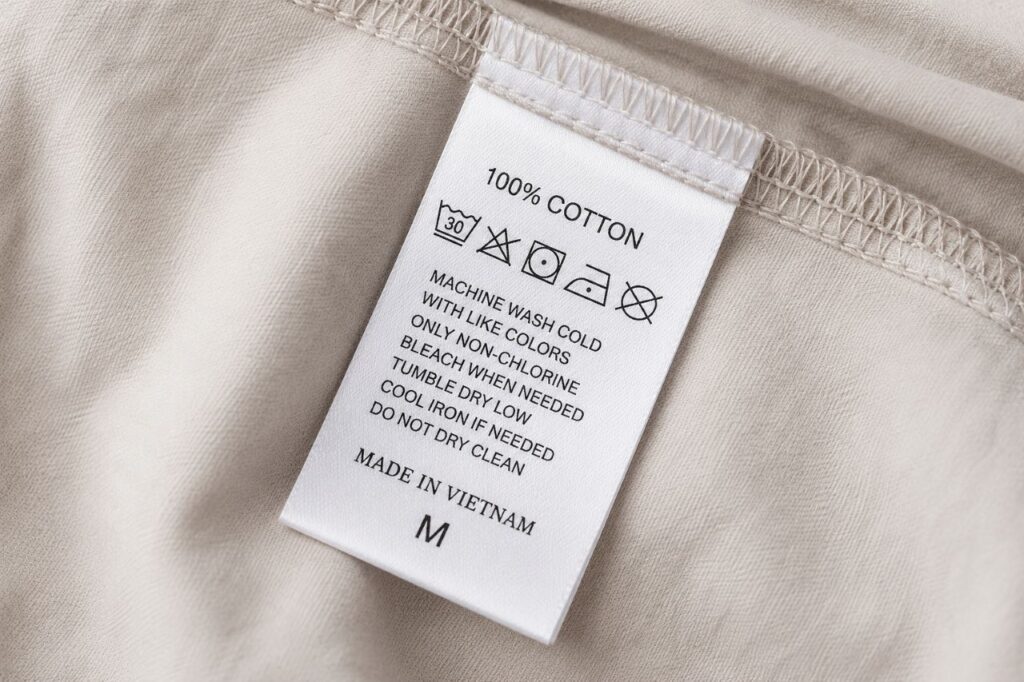
Care Label Regulations
An in-depth overview of key care label regulations in the United States, Europe, and Japan, including the FTC and GINETEX standards. Learn how to prevent trade barriers, product returns, recalls, and regulatory penalties caused by incorrect labeling while establishing a globally compliant care label management system.
Care labels not only provide consumers with proper garment care instructions but also serve as legally required labeling documents for textile products in international trade. As global apparel sales continue to grow, markets such as the United States, the European Union, and Japan have established different legal requirements for textile fiber content and care labeling. Incorrect, incomplete, or inconsistent label information may result in customs detention, product delisting, customer complaints, regulatory penalties, or even product recalls. Therefore, implementing a care label management system that complies with the regulations of each target market has become an essential part of global supply chain quality management.
Keywords: Care Label Regulations, Global Care Label Compliance, FTC Regulations, GINETEX, Compliance
Why Have Care Label Regulations Become an Important Part of Global Supply Chain Management?
For brand owners, purchasing professionals, and suppliers, care labels are more than just product accessories—they are essential documents for product information disclosure. Information such as fiber composition, country of origin, care instructions, and importer details may all be regulated by local laws.
If the information on a care label does not accurately reflect the product, the following risks may occur:
- Import restrictions by customs
- Product returns or shipment rejection
- Removal from e-commerce platforms
- Product recalls
- Consumer claims
- Government administrative penalties
As a result, many international brands require suppliers to establish a complete care label review process before mass production begins.
What Are the Differences Between FTC Regulations and EU Regulation (EU) No 1007/2011?
Although the United States and the European Union have similar requirements for care labels, there are significant differences in their regulatory details.
Comparison of Major International Care Label Regulations
| Regulation / Standard | Applicable Market | Main Requirements | Mandatory | Notes |
|---|---|---|---|---|
| FTC Textile Fiber Products Identification Act | United States | Fiber content, country of origin, manufacturer identification | Yes | U.S. Federal Law |
| Care Labeling Rule (16 CFR Part 423) | United States | Care instruction labeling | Yes | Enforced by the FTC |
| EU Regulation (EU) No 1007/2011 | European Union | Fiber names and fiber composition | Yes | Applies throughout the EU |
| GINETEX Care Symbols | Europe and many other countries | Care symbols | Widely adopted by brands | Internationally recognized symbols |
| JIS L 0001 | Japan | Care symbols | Yes | Japanese Industrial Standard |
| Household Goods Quality Labeling Act | Japan | Fiber composition and quality labeling | Yes | Regulated by Japan’s Consumer Affairs Agency |
Note: The regulations listed above are provided for general industry reference only. Actual compliance requirements depend on the product category, target market, and the latest regulatory updates.
The United States places greater emphasis on product information disclosure and traceability. Therefore, care labels are generally required to include:
- Fiber Content
- Country of Origin
- Manufacturer / RN Number
- Care Instructions
The European Union focuses on the consistency of official fiber names. Manufacturers are not permitted to create their own fiber names and must use the official terminology specified in Regulation (EU) No 1007/2011.
Japan adopts the JIS care symbols and requires compliance with its Household Goods Quality Labeling Act.
Therefore, garments sold simultaneously in the U.S., European, and Japanese markets usually require different versions of care labels.
How Does GINETEX Improve Care Label Compliance?
The care symbols developed by GINETEX (International Association for Textile Care Labelling) have been adopted by many leading apparel brands worldwide.
Its primary advantages include:
- High global recognition
- Reduced translation errors
- Better consumer understanding
- Lower after-sales service costs
- Improved consistency across international brands
Many global brands use GINETEX care symbols as the standard format while supplementing them with language-specific text for different markets.
However, it is important to note that GINETEX itself is not a legal regulation in every country. Instead, it is an internationally recognized care symbol system that is accepted or referenced by many national regulations. Companies should always verify the specific legal requirements of their target markets.
What Are the Most Common Care Label Errors in Global Markets?
Many export issues are caused not by product quality, but by labeling errors.
Common mistakes include:
- Abbreviating “Polyester” as “Poly”
- Claiming “Organic Cotton” without proper certification
- Fiber percentages not totaling 100%
- Using outdated or incorrect care symbols
- Incorrect country of origin declaration
- Inconsistent brand and importer information
- Errors in multilingual translations
These issues may require labels to be reprinted, increasing production costs and delaying delivery schedules.
For this reason, many international brands establish a care label approval process during product development, involving regulatory, purchasing, and quality assurance teams.
How Should Care Labels Be Planned for Different Global Markets?
When establishing a global care label management system, companies should consider the regulatory requirements of each export market.
Global Care Label Planning Comparison
| Item | United States | European Union | Japan |
|---|---|---|---|
| Fiber Content | Required | Required | Required |
| Country of Origin | Required | Required for many products | Recommended |
| Care Symbols | Symbols with text | GINETEX commonly used | JIS symbols |
| Primary Regulation | FTC | EU Regulation 1007/2011 | JIS L 0001 |
| Language Requirements | English | Multiple European languages | Japanese |
| Common Export Risk | Incorrect fiber content | Incorrect fiber names | Incorrect care symbols |
Note: The information above reflects common industry practices. Actual regulatory requirements may vary depending on product categories and future regulatory updates.
Many companies adopt a modular care label system, including:
- Standardized global care symbols
- Market-specific language versions
- Automatic country-of-origin updates
- ERP integration with product composition data
- Version control management
This approach helps reduce manual input errors and improves supply chain consistency.
Establishing a Care Label Compliance Process Can Reduce Global Legal Risks
Many global brands incorporate care label management into their Quality Management System (QMS) and establish the following procedures:
- Identify the destination market.
- Develop market-specific care label templates.
- Verify fiber composition percentages.
- Confirm that care instructions match product testing results.
- Complete regulatory review.
- Conduct pilot production verification.
- Approve the final label before mass production.
In addition, products containing recycled fibers, organic cotton, wool, down, or other specialty materials should also verify that all certification claims comply with both brand requirements and local regulations to reduce legal risks associated with misleading claims.
What Quality Tests Should Be Used to Verify Care Label Information?
Although most regulations primarily govern labeling content, the care instructions printed on the label should accurately reflect the product’s actual performance. Therefore, relevant laboratory testing is recommended.
Common tests include:
- ISO 6330: Domestic washing and drying procedures used to evaluate dimensional stability and appearance changes after laundering.
- ISO 3758: Specifies internationally recognized textile care symbols to ensure care labels comply with global standards.
Recommended Reference Values (Industry Reference Only): Dimensional change after washing is commonly controlled within ±3% to ±5%. However, the actual acceptance criteria should always follow brand specifications, product applications, and technical documentation.
Cross-checking laboratory test results with care label instructions helps reduce consumer complaints, product returns, and disputes caused by inaccurate labeling.
Conclusion
As global supply chains and cross-border e-commerce continue to expand, care labels have become far more than simple product identifiers. They are essential compliance tools that help companies meet international regulations, protect brand reputation, and reduce trade risks. By introducing regulatory review, standardized label management, and product performance verification during the early stages of product development, purchasing teams can improve supply chain consistency, reduce the costs and legal risks associated with labeling errors, and strengthen their products’ competitiveness in global markets.
Illume Ltd. provides professional product testing and supply chain management services to help clients meet global quality inspection standards (fees apply).
References
- ISO 3758 — Textiles — Care labelling code using symbols
- ISO 6330 — Textiles — Domestic washing and drying procedures for textile testing
⚠️ Dihttp://ISO 6330sclaimer: The testing methods, recommended standards, and reference values mentioned in this article are provided as general industry references only. Actual requirements should always be determined according to product design, intended application, brand technical specifications, and the latest applicable regulations.