
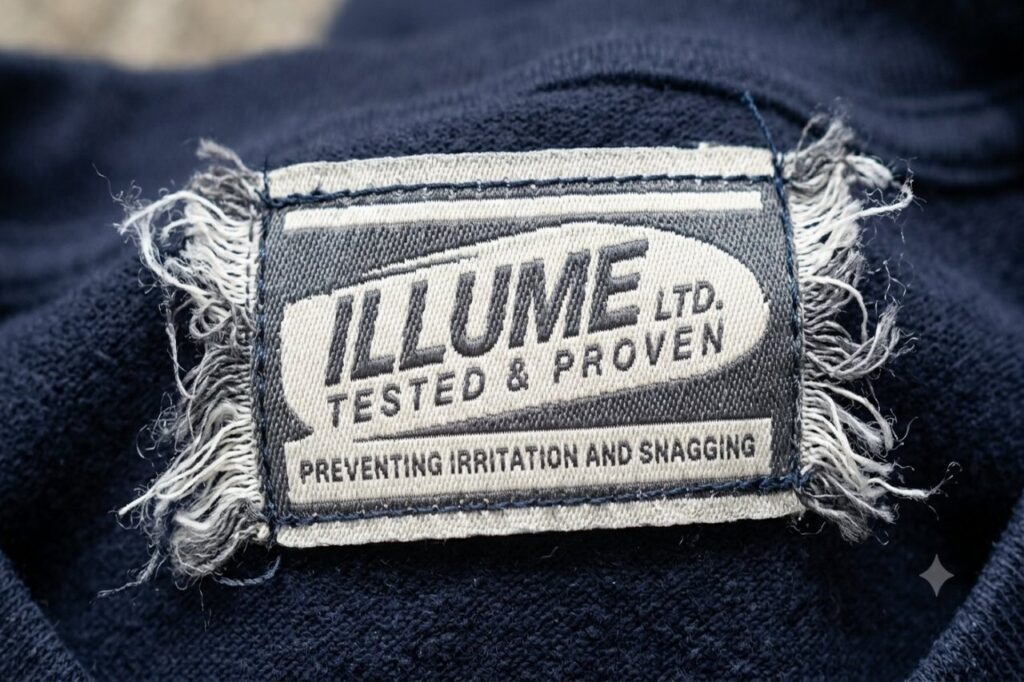
Woven label quality is a defining factor in the apparel manufacturing supply chain, as these labels serve far beyond simple brand identification, product information, and regulatory markings. They directly influence both wearer comfort and the consumer’s first impression of product excellence. Indeed, many product returns, customer complaints, and quality-related issues stem not from the main fabric, but from overlooked details such as scratchy edges, snagging, hardened heat-cut surfaces, loose threads, or poor cutting precision.
For purchasing departments and quality managers, the sourcing process should extend well beyond verifying dimensions and appearance. It is equally essential to gain a deep understanding of label finishing processes, advanced cutting technologies, and core quality inspection indicators. This is particularly critical in segments such as premium apparel, high-performance sportswear, lingerie, and baby products, where woven label quality has evolved into a vital benchmark for assessing overall supply chain management capability.
Keywords: Woven Label, Ultrasonic Cutting, Quality Inspection Indicators, Snagging, ASTM D4966, ISO 13936-2, ISO 3758
The Core Risks and Decision-Making Principles of Woven Label Quality Management
Woven label quality issues are often the result of multiple factors, including material structure, cutting methods, sewing locations, and actual usage conditions. Improper cutting may create rough edges and hardened surfaces. Exposed yarns along the edge can become snagging points. Unstable sewing tension or construction may lead to curling, seam slippage, or loose threads after washing.
For purchasing teams, the most important strategy is to ensure that inspection items directly correspond to potential customer complaints. For example, garments worn next to the skin require a strong focus on edge comfort. Knitwear requires careful evaluation of snagging risks. Products that are washed frequently should be tested for label structural integrity after repeated laundering.
When evaluating suppliers, purchasing managers should not make decisions based solely on price. Suppliers should also be required to demonstrate their quality control checkpoints within the production process. Quality issues should be identified and corrected before mass production rather than being discovered by consumers after purchase.
Four Key Quality Inspection Stages for Woven Labels and How to Avoid Common Problems
- Raw Material and Weaving Structure Inspection
The first step is to verify raw materials, fabric density, and label construction. Labels made from overly thin materials or loosely woven yarns may still experience fraying or rough cut edges, even when advanced cutting equipment is used.
Practical Recommendation: During sample development, purchasing teams should inspect label thickness, weave stability, and edge sealing performance. If a supplier cannot provide a reasonable structural analysis of the sample, it is advisable to request adjustments to the weft density. This can significantly reduce the risk of loose threads during later processing.
- Edge Softness Inspection After Cutting
Scratchy label edges are often caused by hard cut surfaces or remaining burrs. Ultrasonic cutting technology uses high-frequency vibration and instant heat sealing to reduce fraying and rough edges effectively.
Practical Recommendation: During supplier inspections, visual checks alone are not sufficient. A simulated touch test is also recommended. For baby garments and underwear products, suppliers should provide softness evaluation reports for the cut edges. If a supplier cannot clearly explain cutting parameters such as pressure and vibration amplitude, it may indicate inconsistent process control and should be considered a potential risk.
- Snagging Risk and Seam Stability Evaluation
Raised surfaces or loose threads on woven labels can easily damage performance fabrics. ASTM D4966 (Abrasion Resistance Testing) and ISO 13936-2 (Seam Slippage Resistance) can be used to evaluate surface durability and seam stability respectively.
Practical Recommendation: When labels are sewn onto high-friction areas such as collars or cuffs, stitch density and sewing tension should be carefully verified. If suppliers mention process limitations, purchasing teams should request snagging resistance reports from similar materials previously produced. This helps verify process control capability and ensures compatibility between trims and the main fabric.
- Verification of Structural Integrity and Label Information After Washing
ISO 3758 defines textile care labeling symbols and ensures washing instructions are presented consistently and accurately.
Practical Recommendation: For brands selling products across multiple markets, the accuracy of care symbols is a critical compliance requirement. It is recommended to combine home laundering tests with colorfastness evaluations to verify that label information remains readable throughout the product’s life cycle. If labels curl or warp after washing, suppliers should review adhesive materials or heat transfer temperatures.
International Testing Standards and Product Technology Comparison Tables
Table 1: Common International Testing Standards for Woven Label Quality Control
| Testing Standard | Test Item | Purpose and Importance for Woven Labels |
|---|---|---|
| ASTM D4966 | Martindale Abrasion Resistance | Evaluates whether the surface is prone to fuzzing, damage, or appearance deterioration. |
| ISO 13936-2 | Seam Slippage Resistance | Determines whether seams are likely to slip or loosen, ensuring attachment stability. |
| ISO 3758 | Care Labeling Symbols | Ensures care instructions are presented correctly and reduces the risk of improper garment care. |
Table 2: Quality Impact Analysis of Different Cutting Technologies
| Comparison Item | Conventional Knife Cutting | Traditional Heat Cutting | Ultrasonic Cutting |
|---|---|---|---|
| Edge Smoothness | Fair | Good | Excellent |
| Fraying Control | Poor | Good | Excellent |
| Snagging Risk | High | Medium | Low |
| Wearing Comfort | Fair | Good | Excellent |
| Suitable Applications | Cost-Sensitive Products | General Trims | Premium Brands and Skin-Contact Applications |
(Note: The testing standards and suggested values listed above are common industry references. Actual acceptance criteria should be adjusted according to product design, application, and specific brand technical requirements.)
Conclusion: Systematic Quality Inspection Reduces Supply Chain Costs
Although woven labels are considered garment trims, they are one of the product details that directly interact with consumers. Through four key inspection stages—raw material verification, edge inspection after cutting, snagging and seam stability evaluation, and post-wash integrity verification—companies can effectively reduce quality risks and customer complaints.
By applying ASTM and ISO standards as part of the quality management process, purchasing departments can transform testing requirements into clear acceptance criteria and identify potential issues before products reach the market.
For teams that value brand reputation and supply chain stability, adopting advanced technologies such as ultrasonic cutting and establishing a systematic inspection process is not only a quality control strategy but also a long-term investment in product value. Scientific quality management methods can significantly reduce return costs and reputation damage caused by trim-related defects, helping brands build a strong and sustainable quality advantage.
Illume Ltd. provides professional product testing and supply chain management services to help clients meet global quality inspection standards (fees apply).
References
ASTM D4966: Standard Test Method for Abrasion Resistance of Textile Fabrics (Martindale Abrasion Tester Method).
ISO 13936-2: Textiles — Determination of the Slippage Resistance of Yarns at a Seam in Woven Fabrics.
ISO 3758: Textiles — Care Labelling Code Using Symbols.
⚠️ Note: The recommended testing standards and acceptance criteria provided in this article are for reference only. Final requirements should be based on customer specifications, brand standards, and actual product application conditions.