

Hang tag and swing tag serve as the initial point of interaction between a brand and its consumers in the apparel, packaging, and retail industries. Beyond standard woven labels, care labels, and fabric labels, these tags function as a vital medium for communicating both product quality and core brand value. In the mid-to-high-end market, the strategic combination of carefully selected materials and refined finishing techniques not only elevates the perceived value of the product but also fortifies consumer trust. For sourcing managers and procurement decision-makers, balancing aesthetic appeal with long-term supply chain quality stability is now a critical factor in evaluating any robust brand identification system.
Keywords: hang tag, swing tag, paper material selection, FSC certification, ISO 536, TAPPI T414
Why Hang Tag and Swing Tag Material Selection Is Essential to Brand Value
High-quality hang tags and swing tags are more than just information carriers. They also provide the following commercial benefits:
- Enhanced visual identity: Premium texture and finishing techniques instantly elevate the perceived value of a product.
• ESG value communication: Using FSC-certified paper aligns with international green supply chain sourcing trends.
• Product information protection: Durable materials help ensure label information remains intact during logistics and handling.
During the sourcing process, relying only on appearance often leads to quality issues. Therefore, incorporating internationally recognized physical testing standards into supplier evaluations is essential for maintaining stable mass-production quality and reducing return rates.
Comparison of 5 Premium Hang Tag Materials and Selection Strategies
The physical structure of paper materials directly affects the results of post-processing techniques such as foil stamping and embossing. Below is a comparison of five commonly used premium paper materials and their applications.
Product Comparison Table: Characteristics of Premium Hang Tag Materials
| Paper Type | Surface Characteristics | Suitable Brand Style | Common Thickness | Key Brand Advantages |
|---|---|---|---|---|
| Coated Card Paper | Smooth glossy surface | Fast fashion, mass-market apparel | 250–400 gsm | Bright print colors and versatile processing compatibility |
| Black Card Paper | Dark matte finish | Luxury brands, streetwear brands | 300–700 gsm | Strong premium appearance and high visual contrast |
| Cotton Paper | Visible fiber texture | Handmade and natural brands | 250–500 gsm | Soft touch with strong uniqueness |
| Kraft Paper | Natural coarse fibers | Eco-friendly brands | 200–450 gsm | FSC certification compatibility and sustainable image |
| Pearl Paper | Metallic reflective effect | Cosmetics and premium accessories | 250–400 gsm | Strong visual recognition with shimmering effect |
Note: Recommended thickness and material selection should be adjusted according to packaging structure and application requirements. Data is for reference only.
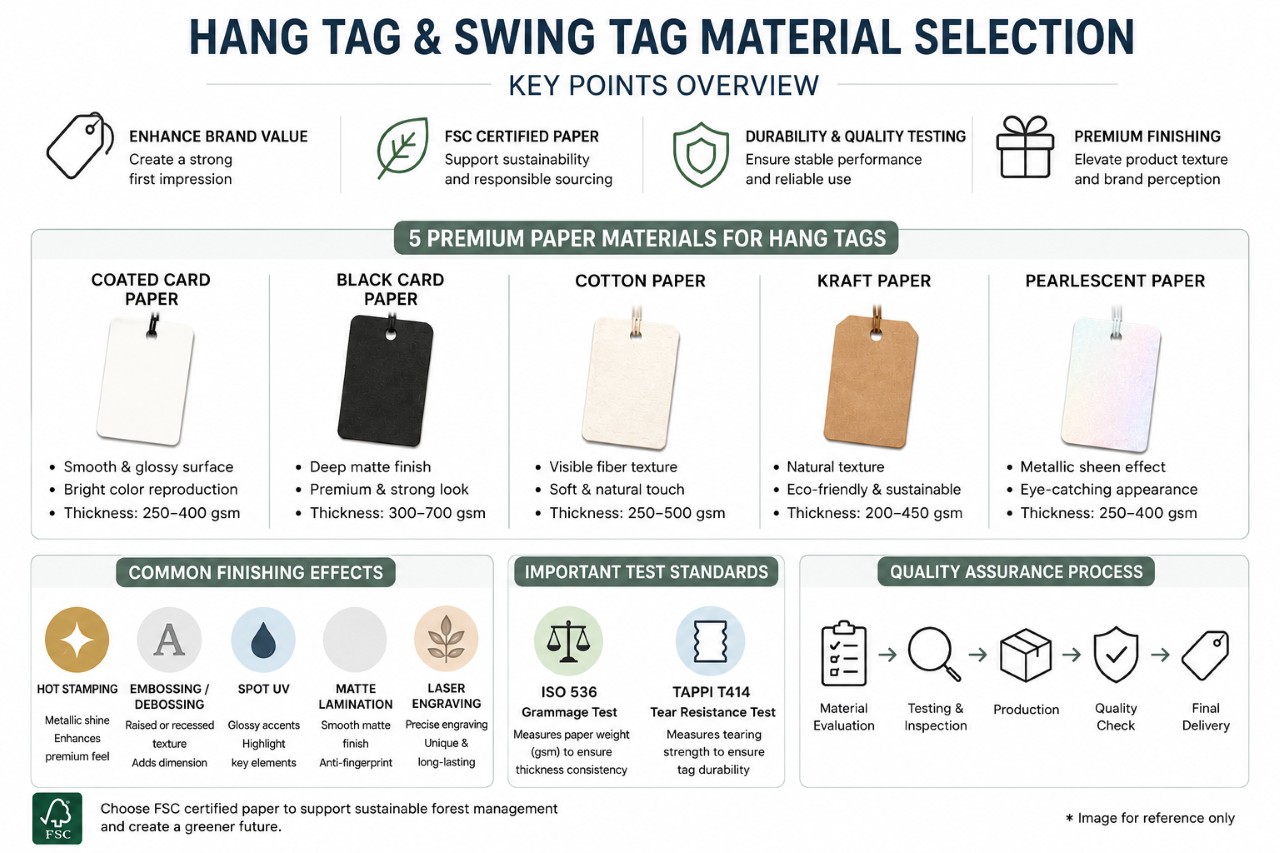
In-Depth Analysis of Paper Material Applications
- Coated Card Paper: Considered an industry-standard paper, it can achieve precise Pantone color matching through offset printing, making it suitable for hang tags requiring large-scale variable printing.
- Black Card Paper and Pearl Paper: These specialty papers require careful attention to finishing adhesion. Simulated transportation abrasion testing is recommended to prevent foil stamping layers from peeling off.
- Eco-Friendly Paper Materials (FSC Certified): Using FSC-certified paper not only demonstrates a brand’s ESG commitment but also improves product acceptance in European and North American markets. Procurement teams should verify the supplier’s FSC Chain of Custody (CoC) certification to ensure sourcing transparency.
Using International Standards for Hang Tag Quality Control
To ensure hang tags and swing tags remain intact during transportation and retail display, implementing international testing standards for both materials and finished products is essential.
International Testing Standards Comparison Table
| Test Type | Standard Code | Testing Purpose | Recommended Industry Practice |
|---|---|---|---|
| Grammage Testing | ISO 536 | Measures paper weight per unit area (gsm) | Confirms paper stiffness and batch consistency |
| Tear Resistance Testing | TAPPI T414 | Measures paper resistance to tearing under force | Ensures hanging holes resist tearing during pulling |
| Color Fastness Testing | ASTM D5264 | Evaluates print surface abrasion resistance | Prevents ink peeling during transportation |
| Environmental Management Certification | ISO 14000 | Ensures manufacturing processes meet environmental regulations | Evaluates whether printing inks are low VOC |
Testing Standards Analysis
- ISO 536 (Grammage Testing): This is one of the most common specifications included in procurement contracts. For example, if the paper is labeled as 400 gsm, the actual deviation should generally remain within 5%. Insufficient grammage may affect paper stiffness and increase the risk of tearing at punched holes.
- TAPPI T414 (Tear Resistance Testing): Luxury brand hang tags are often designed to support heavier products. This test ensures the material does not tear easily under external force during hanging and handling, making it a key indicator of paper structural strength.
Common Specialty Finishing Issues and Prevention Methods
In addition to material selection, finishing techniques such as foil stamping, embossing, debossing, and spot UV coating can significantly enhance brand identity. However, the following risks should also be considered:
- Foil Stamping Peeling: Usually caused by excessive surface coating thickness or uneven heat and pressure during the foil stamping process.
- Edge Cracking: When swing tag thickness exceeds 400 gsm, insufficient creasing treatment may lead to cracking during folding.
- Black Card Surface Scratches: Black paper materials are sensitive to fingerprints and scratches. Applying scratch-resistant protective coatings is recommended.
Conclusion and Recommendations
High-quality hang tags and swing tags are the first bridge connecting a brand with consumers. By implementing ISO 536 grammage testing and TAPPI T414 tear resistance testing, procurement managers can effectively control supply chain variations and ensure every product delivered to consumers reflects refined, durable, and brand-consistent quality standards.
Illume Ltd. provides professional product testing and supply chain management services to help clients meet global quality inspection standards (paid service).
References:
• ISO 536 (Paper and board — Determination of grammage)
• TAPPI T414 (Internal tearing resistance of paper)
⚠️ Note: The testing methods and data mentioned in this article are based on common industry practices and are for reference only. Actual specifications should be confirmed according to product design, application, and brand technical standards.